Credible Theories Sign in
Enoch, Jubilees and others · Jubilees 4:15; 5:1

Watchers came to teach, Jubilees 4:15

Share

In plain words

This is a short passage from the Book of Jubilees, a Jewish retelling of Genesis and the start of Exodus, written about 160 to 150 BC. It says angels called the Watchers came down to earth in the days of Jared to teach people and to bring justice and right living. A later verse says they then took human wives.

ReferenceJubilees 4:15; 5:1
Writtenc. 160–150 BCE
SetDays of Jared
For in his days the angels of the Lord descended on the earth, those who are named the Watchers, that they should instruct the children of men, and that they should do judgment and uprightness on the earth.

Documented · Ancient text, c. 160–150 BCE Translation: R. H. Charles, 1902

Read it literally

Jubilees changes the motive: the mission was legitimate. Only later (5:1) did they take wives. This gives us good Watchers who went bad slowly.

What scholars say

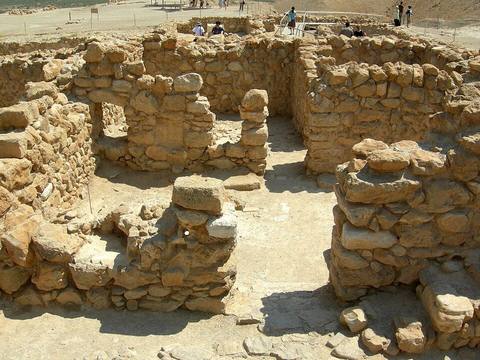
Hebrew fragments at Qumran; complete only in Ge'ez.

Themes From the sky Giants and hybrids
People and places hereQumran
The same story, told elsewhere

Shared story · Beginnings

Beings Who Taught Humanity the Arts

Fallen angels taught metalwork and makeup, a fish-man from the sea taught writing and law, Prometheus gave fire and numbers, and Thoth invented letters. Many cultures say civilization was a gift from outside.

Book of Jubilees is one telling. The same story is told 6 more times, in 4 parts of the world. Follow it:

  1. GreekAthens · c. 460-430 BCE · Ancient text
  2. Greek, about EgyptAthens, telling an Egyptian story · c. 370 BCE · Ancient text
  3. ChineseChina · c. 4th to 3rd century BCE · Ancient text
  4. Jewish apocalyptic (Second Temple)Judea · c. 300-200 BCE · Ancient text
  5. Babylonian, retold in GreekBabylon · c. 280 BCE · Ancient text
  6. Jewish (Second Temple)Judea · c. 160-150 BCE · Ancient textTied to this page
  7. IslamArabia · 7th century CE · Medieval text

The open question: Did people credit outsiders for their own inventions, or is there a reason so many say they were taught? Join the debate

Questions people ask about Jubilees 4:15

What is the Book of Jubilees?

Jubilees retells Genesis and the first part of Exodus, as told to Moses on Mount Sinai. It divides history into jubilees, periods of 49 years, which gives the book its name. It is sometimes called 'Little Genesis'. It is canon only in the Ethiopian Orthodox Church and among Beta Israel, the Jews of Ethiopia.

When was the Book of Jubilees written?

Most scholars date it to the middle of the second century BCE, around 160 to 150 BCE. That places it shortly after the Maccabean revolt. More than a dozen Hebrew copies turned up among the Dead Sea Scrolls, a sign the Qumran community valued it highly. A Latin version also survives in part.

What happens to the Watchers and their children in Jubilees?

God has the Watchers bound in the depths of the earth, and their giant sons are made to kill one another. In Jubilees 10, evil spirits begin to harm Noah's grandchildren. Their chief, Mastema, asks to keep some of them, and God allows one tenth to remain on earth while the rest are locked away.

Used on these files

  • The Book of Jubilees: Genesis Retold by an Angel DocumentedAccording to this book, an angel dictated the history of Genesis to Moses, and every event fits a sacred 364-day calendar. It claims that until Adam and Eve left Eden, all the animals spoke one language. Complete only in Ethiopia, it tells a gentler Watcher story than Enoch does. Why did the Watchers first come as teachers?
  • The Watchers: Who Were the Fallen Angels of Enoch? Myth or legendThe story says some angels who never sleep came down to a real mountain summit, picked up human wives, and taught people metalworking, spells and astronomy. Their leaders are named, each in charge of ten others. The same word shows up in the Book of Daniel as a heavenly council. So who exactly were the Watchers?

Where this comes from

EvidenceDocumented

Comes from The Book of Jubilees, Jubilees 4:15; 5:1, read here in the R. H. Charles. A Jewish retelling of Genesis and the start of Exodus, written about 160 to 150 BC, that sorts history into blocks of 49 years called jubilees. Full copies survive only in Ge'ez, the old church language of Ethiopia.

What this means

The text exists and is quoted from a published translation. What it describes is a separate question.

Primary records exist: an original document, a published text, an official file or a dated report. We link to them. This level says the record exists and what it says, not that every claim in it is true.

See all five labels

Sources

  1. The Book of JubileesA Jewish retelling of Genesis and the start of Exodus, written about 160 to 150 BC, that sorts history into blocks of 49 years called jubilees. Full copies survive only in Ge'ez, the old church language of Ethiopia. About fifteen Hebrew copies were found among the Dead Sea Scrolls between 1947 and 1956.R. H. Charles, The Book of Jubilees (1902; SPCK 1917) Online copyPrimary text Archived copy, 2026-10-03
  2. The Book of JubileesThe Book of Jubilees, trans. R. H. Charles, The Book of Jubilees (1917) Online copyPrimary text Archived copy, 2026-10-03
  3. The Book of Enoch (1 Enoch)Jewish writings about Enoch, Noah's great-grandfather, the oldest parts from about 300 to 200 BC. It tells of angels called Watchers who came down to earth. Full copies survived only in Ethiopia, whose church still counts it as scripture. Pieces in Aramaic were found among the Dead Sea Scrolls in 1952.1 Enoch 6–8, trans. R. H. Charles, The Book of Enoch (1917) Online copyPrimary text Archived copy, 2026-09-03

Scholarly dates are rounded. The wording follows the named public-domain translation.

More from Enoch, Jubilees and others

Two more stories, and what each shares with Watchers came to teach.

RelatedTwo hundred descend on Mount Hermon1 Enoch 6:1–8

Angels desire human women and agree to take wives and have children with them.

Also about JaredSame theme: From the sky
Photo credits
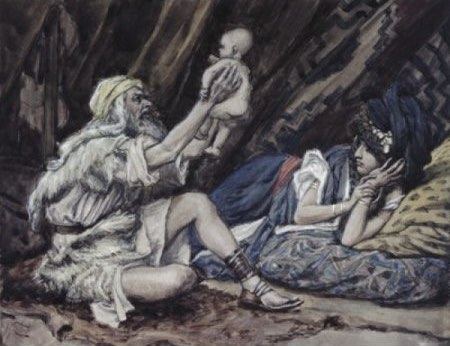
RelatedNoah's strange birth1 Enoch 106:1–6

It describes baby Noah with hair white as wool and eyes that lit up the whole house like the sun.

Also about QumranSame theme: From the sky

Updated

Discussion