Credible Theories Sign in
Enoch, Jubilees and others · Cave of Treasures

The Sethites come down the mountain, Cave of Treasures

Share

In plain words

This is a summary from the Cave of Treasures, a Christian book written around 400 to 600 CE in Syriac, a language of the Middle East. It says the children of Seth lived on a holy mountain near Paradise and were called "sons of God." Cain's descendants below lured them with music. They broke their oath and went down, and their children were the giants.

ReferenceCave of Treasures
Writtenc. 400–600 CE, Syriac
SetBefore the Flood
The children of Seth live on a holy mountain near Paradise and are called 'sons of God'. Cain's descendants below make music and seduce them. The Sethites break their oath and go down the mountain, and their children are the giants.

Documented · Retold in English, c. 400–600 CE Summary by the editors. Translation: Summary (Budge 1927) · About the translator

Read it literally

A second reading of Genesis 6: the 'sons of God' were a human elite on a mountain.

What scholars say

A Christian retelling of Genesis; Budge published it in 1927.

Themes Giants and hybrids Council of gods
Questions people ask about Cave of Treasures

Where can I read the Cave of Treasures in English?

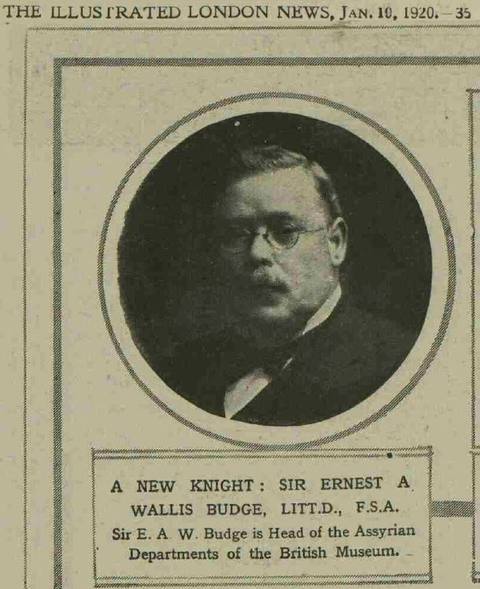
E. A. Wallis Budge translated it from Syriac in 1927 as The Book of the Cave of Treasures, and copies of that edition can be read free online. Budge was Keeper of Egyptian and Assyrian antiquities at the British Museum. Since then scholars have published newer editions based on more manuscripts, including a French translation.

Who wrote the Cave of Treasures?

Its author is unknown. Many manuscripts credit Ephrem the Syrian, a famous fourth-century poet and church father, but scholars reject that claim. The title refers to a cave where Adam is said to have stored gold, frankincense and myrrh from Paradise, which the book links to the gifts later brought by the magi.

Where did the idea that the 'sons of God' were Sethites come from?

Christian writers began reading Genesis 6 this way by the third century, including Julius Africanus. Augustine backed the view in The City of God, and it became the most common Christian reading for centuries. It moved the story away from angels marrying women. Early Jewish texts such as 1 Enoch had instead taken the sons of God to be angels.

Used on these files

  • The Divine Council: Who Sat in God's Heavenly Assembly? Myth or legendIn Psalm 82, God stands in a heavenly assembly and sentences its members: "ye shall die like men." In Job, the sons of God come to present themselves, and an accuser walks in among them. The Hebrew Bible keeps glimpsing a divine court. Is it poetry about angels, or something older and stranger?

Where this comes from

EvidenceDocumented

Comes from The Cave of Treasures, Cave of Treasures, read here in the E. A. Wallis Budge. A Christian book written in Syriac, a language of the Middle East, telling world history from Creation to Jesus. Scholars date its present form to about the AD 500s, using older material.

What this means

The text exists and is quoted from a published translation. What it describes is a separate question.

Primary records exist: an original document, a published text, an official file or a dated report. We link to them. This level says the record exists and what it says, not that every claim in it is true.

See all five labels

Sources

  1. The Cave of TreasuresA Christian book written in Syriac, a language of the Middle East, telling world history from Creation to Jesus. Scholars date its present form to about the AD 500s, using older material. E. A. Wallis Budge of the British Museum published an English version in 1927.E. A. Wallis Budge, The Book of the Cave of Treasures (1927)Primary text Archived copy, 2026-10-03
  2. The Book of PsalmsA collection of 150 songs and prayers in the Bible, written over several centuries and long used in Jewish and Christian worship. Psalm 82 pictures God judging other 'gods' in a heavenly council. More copies of the Psalms were found among the Dead Sea Scrolls than of any other book.Psalm 82, King James Version Online copyPrimary text Archived copy, 2026-10-03

Scholarly dates are rounded. The wording follows the named public-domain translation.

More from Enoch, Jubilees and others

The story before and after this one, and what each shares with The Sethites come down the mountain.

‹ Before thisSolomon's flying wagonKebra Nagast, chapters on the Ark's journey

In it, Menelik, the son of King Solomon and the Queen of Sheba, leaves Jerusalem with the Ark of the Covenant, and his group's wagons rise a cubit off the ground so a thirteen-day trip takes one day.

Also about E. A. Wallis Budge
Photo credits
Next ›The Book of Jasher: hybrids of animalsBook of Jasher 4:18

It was first printed in 1625, likely from medieval times, and put into English in 1840.

Same theme: Giants and hybrids

Updated

Discussion