How the rabbit hole works. Start with anything that grabs you, say UFOs. Every person, place and document a page mentions links to its own page, so a UFO file leads to a witness, the witness leads to the people who investigated the case, and it keeps going.
The path you take shows in the bar under the top menu on every page, so you can step back any time or climb out and start again.
This is a short passage from the Quran, the holy book of Islam, which Muslims believe God revealed to the Prophet Muhammad from 610 to 632 CE. It tells of a group of sleepers who stayed in a cave for three hundred years, plus nine more. The story is set during Roman persecution, around 250 CE, and scholars connect it to the Christian legend of the Seven Sleepers of Ephesus.
ReferenceSurah 18:9–25
Written610–632 CE
SetRoman persecution, c. 250 CE
And (it is said) they tarried in their Cave three hundred years and add nine.
He did not die. He sleeps inside a mountain, under a castle or on a far island, and when his people need him most he will wake. Britain, Germany, Denmark, Persia, India, Israel and Mexico all tell of a hero who is only waiting.
Frederick Barbarossa in the Kyffhäuser is one telling. The same story is told 7 more times, in 4 parts of the world. Follow it:
The open question: Is the sleeping king a hope people invent whenever they lose a leader they loved, or one very old idea that has travelled from land to land? Join the debate
A man lies down for a nap and wakes to find his brother old, his village gone and his coins worth nothing. The same story is told in Crete, Judea, Ephesus, Arabia, India, Japan, Ireland and New York.
Quran, Surah al-Kahf (the People of the Cave) is one telling. The same story is told 8 more times, in 6 parts of the world. Follow it:
The open question: Is the long sleep a story people passed along from Crete to Ephesus to New York, or does every culture invent it because everyone fears coming home to a world that has moved on? Join the debate
Questions people ask about Surah 18:9–25
What is the Christian story of the Seven Sleepers?
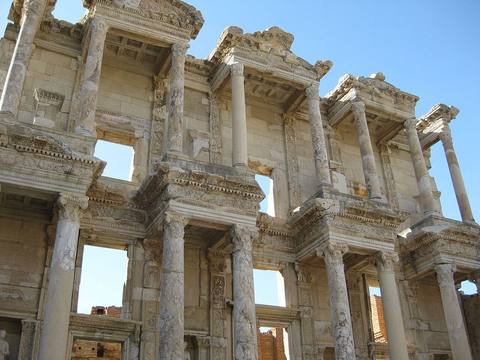
In the Christian legend, seven young men of Ephesus hide in a cave during the persecution under Emperor Decius around 250 CE and fall asleep. They wake under the Christian emperor Theodosius II nearly two centuries later. The tale was told in Syriac by Jacob of Serugh and in Latin by Gregory of Tours.
How many sleepers does the Quran say there were?
The Quran does not give a firm number. Surah 18:22 reports that people will say three, with their dog as the fourth, or five, with the dog as the sixth, or seven, with the dog as the eighth. It then says God knows their number best and tells the Prophet not to argue about it.
Where is the Cave of the Sleepers?
Several places claim it. The Christian tradition points to a site near Ephesus in western Turkey. In Jordan, a cave at Al-Raqim near Amman is visited as the Quran's cave, since Surah 18:9 mentions 'al-Raqim'. Tarsus in southern Turkey has a claimed site as well. Muslim tradition names the dog Qitmir.
Used on these files
People of the Cave: Who Were the Seven Sleepers?Myth or legendYoung believers hide in a cave, and the Quran says they slept "three hundred years and add nine," their dog stretched at the entrance. That odd extra nine matches the gap between 300 solar years and 309 lunar years almost exactly; then one of them walks into town with an old silver coin. What happens next?
Where this comes from
EvidenceDocumented
Comes fromThe Quran, Surah 18:9–25, read here in the Marmaduke Pickthall. The holy book of Islam, which Muslims believe God revealed to the Prophet Muhammad from about AD 610 to 632. Its chapters are called surahs.
What this means
The text exists and is quoted from a published translation. What it describes is a separate question.
Primary records exist: an original document, a published text, an official file or a dated report. We link to them. This level says the record exists and what it says, not that every claim in it is true.













 Ephesus