Credible Theories Sign in

The record

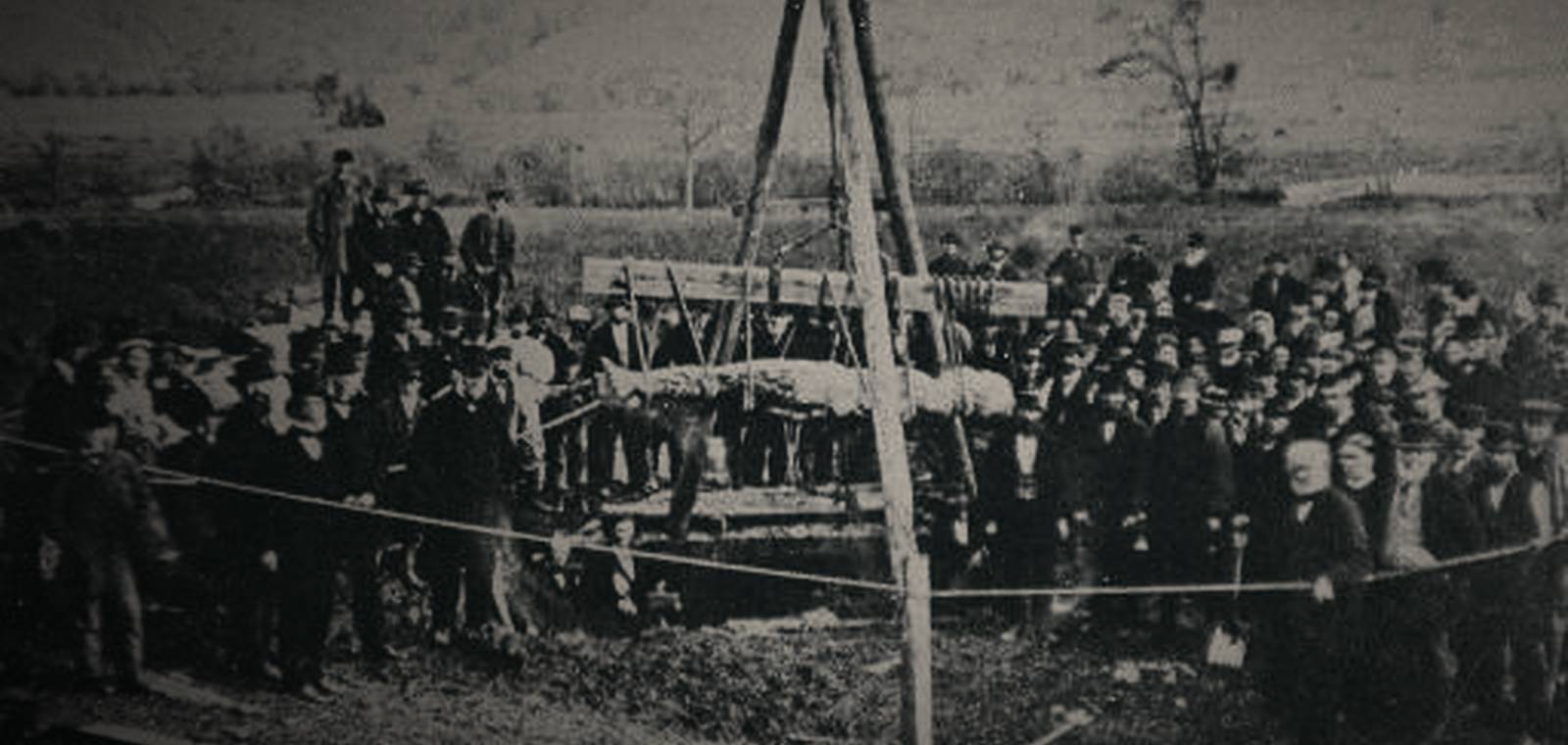
In October 1869 two neighbors hired to dig a well on the Newell farm at Cardiff, near Syracuse, New York, struck a stone foot. As the earth was cleared a huge stone figure appeared, its limbs drawn up as if in pain. Andrew Dickson White, then president of Cornell University, drove down and found a gathering which at first sight seemed like a county fair: a tent over the pit and a crowd pressing to get in. Inside, he wrote, it produced a most weird effect. An air of great solemnity pervaded the place. Visitors hardly spoke above a whisper.

Many visitors took it for a fossil man, one of the giants of Genesis 6:4. White records a Syracuse pastor asking whether anyone could deny the evidence of his senses that it was a fossilized human being, perhaps one of the giants mentioned in Scripture, and a clergyman who declared, This is not a thing contrived of man, but is the face of one who lived on the earth. The State geologist James Hall called it the most remarkable object brought to light in this country. Newell sold a three-fourths share to Syracuse investors, and P. T. Barnum, refused the original, had a copy made and showed that as the Cardiff Giant too.

The answer came from Iowa. In 1878 G. A. Stockwell laid out the story in Popular Science Monthly: George Hull, a tobacconist of Binghamton, had argued about giants with a preacher in 1866 and set out to make one. He had a slab of gypsum quarried in Iowa, near Fort Dodge, shipped it to Chicago, where two stone-cutters carved it, and then aged it: the pores of the skin were imitated by carefully pecking the entire surface with leaden hammers faced with needles, and the figure was stained and washed with acid. It was buried on Newell's farm in November 1868 and "found" a year later on Hull's instruction.

White had doubted it from the first, and a fragment settled it for him: the stone was not the hard local limestone but a soft, friable sulphate of lime, gypsum brought from elsewhere. The Yale paleontologist O. C. Marsh called it of very recent origin, and a most decided humbug. The figure now lies in the main barn at Fenimore Farm, the former Farmers' Museum in Cooperstown, which bought it in 1947 and calls it America's Greatest Hoax.
Questions people ask about The Cardiff Giant

Who made the Cardiff Giant?

George Hull, a tobacconist from Binghamton, New York. He had a block of gypsum quarried in Iowa, carved in Chicago and buried on his relative Newell's farm at Cardiff in 1868.

Why did people believe the Cardiff Giant was real?

It was dug up by well-diggers, looked worn and pitted like skin, and fit the Bible's mention of giants; ministers took it for a fossil man and the State geologist praised it before the stone was traced.

Where is the Cardiff Giant now?

Cooperstown, New York. The living-history museum there has owned it since 1947 and shows it to visitors inside its big main barn.

The open question

Still strange: A giant stone man dug up on a New York farm in 1869 drew thousands of paying visitors, and respected clergymen and the State geologist spoke for it, a year after it had been carved in Chicago.

Giant skeletons in old American mounds →
  1. Step 1 of 4 · This fileThe Cardiff Giant
  2. Step 2 of 4 · Next fileGiant skeletons in old American mounds
  3. Step 3 of 4 · Next fileNephilim: Who Were the Giants of Genesis 6?
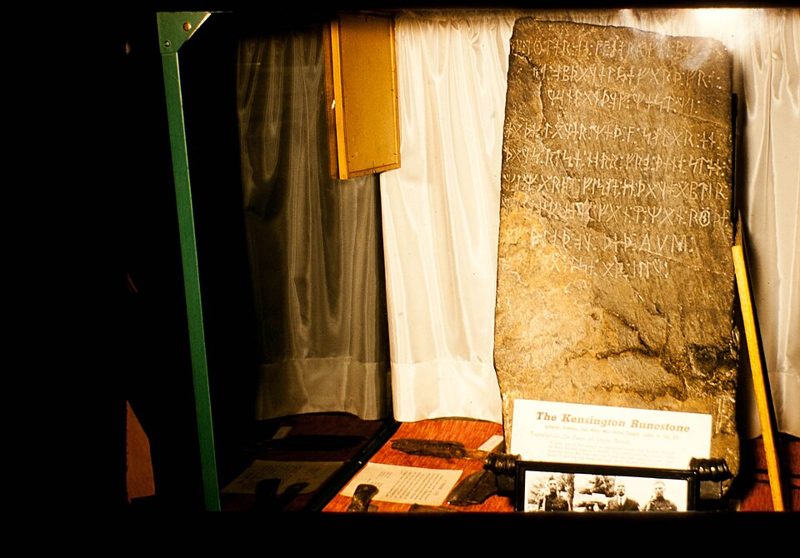
  4. Step 4 of 4 · Next fileThe Kensington Runestone: Norse in Minnesota in 1362?
About these videos

Found by a YouTube search for this topic, not checked by us. The player loads from YouTube only when you press play.

Where this comes from

EvidenceDocumented

Comes from Andrew Dickson White, Autobiography of Andrew Dickson White, vol. 2 (1905), chapter 56…. Internet Archive: A nonprofit digital library in San Francisco, founded in 1996, that holds millions of scanned books, papers and recordings. A scan there shows the pages of a real printed book or document.

What this means

The figure, its making and the hoax are fully documented, including the maker's admission and the stone-cutters' account.

For The Cardiff Giant, the original record exists and is linked: Andrew Dickson White, Autobiography of Andrew Dickson White, vol. 2 (1905), chapter 56…. That tells you the record is real and what it says. It does not mean every claim in it is true.

Primary records exist: an original document, a published text, an official file or a dated report. We link to them. This level says the record exists and what it says, not that every claim in it is true.

See all five labels

Sources

  1. Internet ArchiveA nonprofit digital library in San Francisco, founded in 1996, that holds millions of scanned books, papers and recordings. A scan there shows the pages of a real printed book or document.Andrew Dickson White, Autobiography of Andrew Dickson White, vol. 2 (1905), chapter 56, "The Cardiff Giant: A Chapter in the History of Human Folly, 1869-1870"Primary text
  2. WikisourceA free online library of public-domain texts run by the same foundation as Wikipedia. Volunteers type up old printed works, such as the 1911 Encyclopaedia Britannica, and check them against scans of the pages.G. A. Stockwell, "The Cardiff Giant, and Other Frauds", Popular Science Monthly 13 (June 1878)Primary text
  3. The Farmers' MuseumA history museum in Cooperstown, New York, where the Cardiff Giant is on show today. Its page speaks for the object's current home, not for the 1869 events.Fenimore Farm and Country Village (formerly The Farmers' Museum), Cooperstown, New York, 'The Cardiff Giant'Reference

Quotations come from public-domain translations. A book in our Library links to its Library page; other links open the free online copy or the reference page.

Updated

Credible or not?

Tap one to see how other readers voted.

Discussion