The record
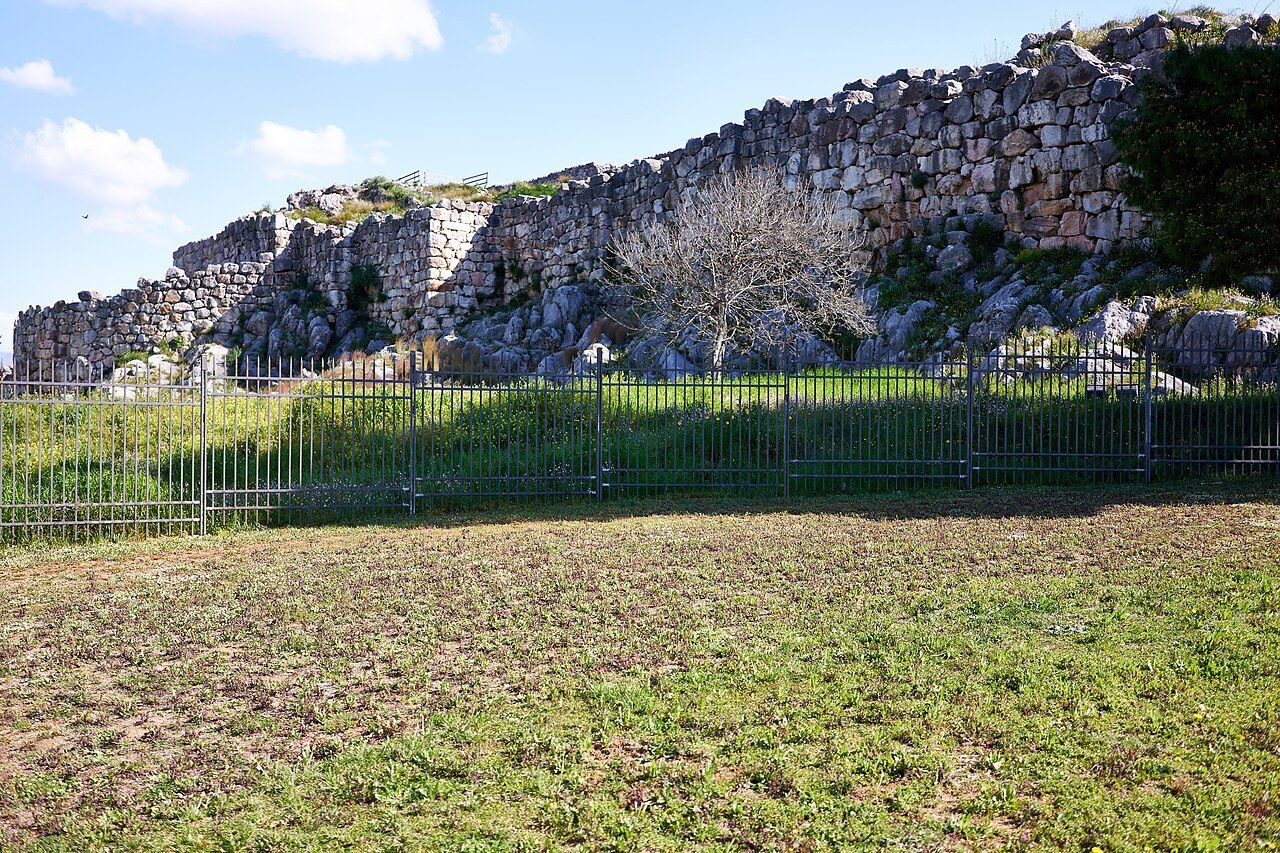
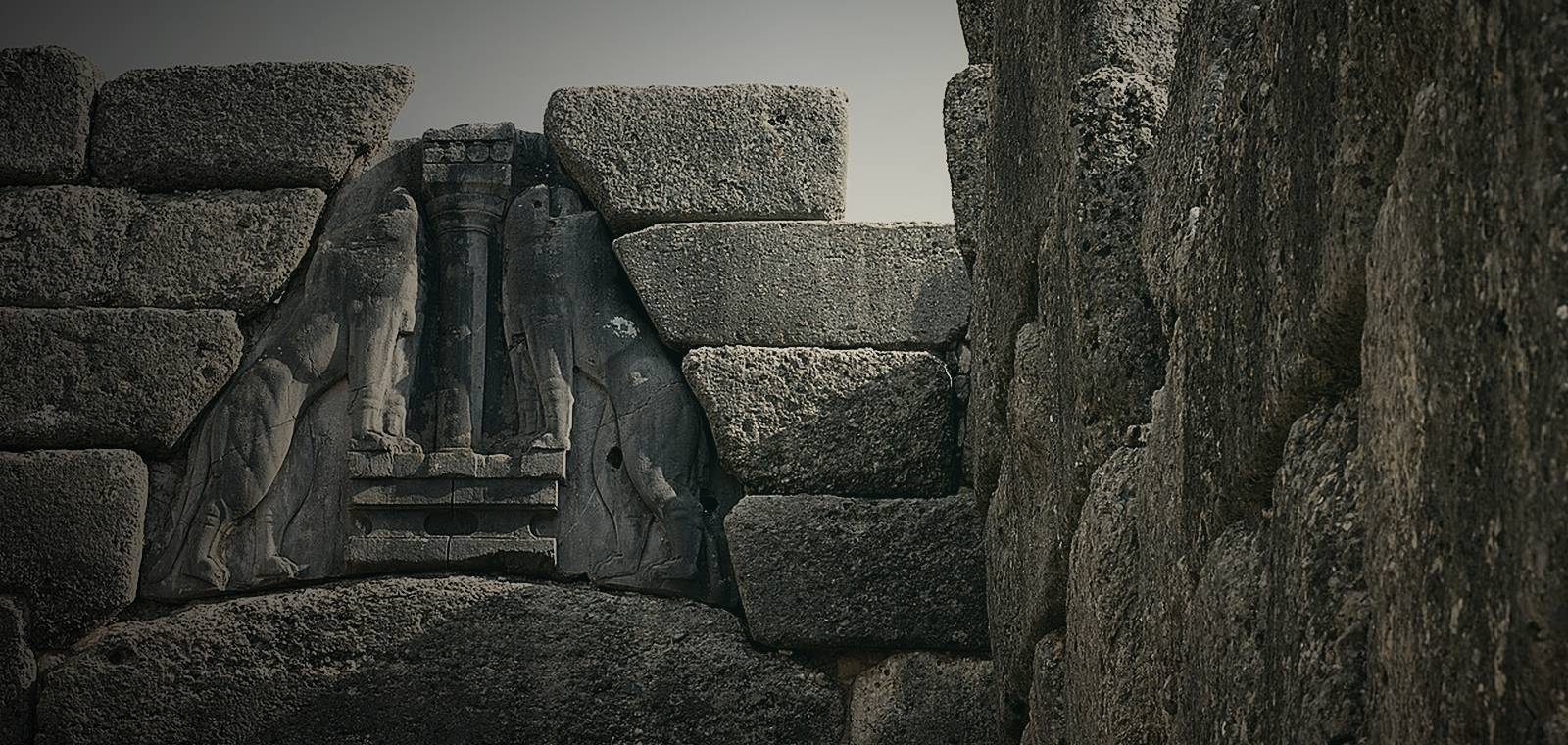
Pausanias, the Greek travel writer, found parts of the city wall still standing, including the gate, upon which stand lions
, said to be the work of the Cyclopes. He also recorded a tradition that inside the walls lay the graves of Agamemnon, of his charioteer Eurymedon, of Cassandra's twin sons and of the men murdered with Agamemnon at a banquet given by Aegisthus. Clytemnestra and Aegisthus, he adds, were buried some distance outside the wall, thought unworthy of a place within it.
Heinrich Schliemann began work at Mycenae on 7 August 1876. Inside the citadel he found a double ring of stone slabs around a group of shaft graves holding bodies covered in gold: diadems, gold leaves over the faces and breasts, and gold masks. In a telegram to King George of the Hellenes, dated 28 November 1876 and printed in his book, he wrote in French that he had found the tombs which the tradition echoed by Pausanias named as those of Agamemnon, Cassandra, Eurymedon and their companions. He gave the treasures, intact, to Greece, and predicted that they would fill a great museum, the most wonderful in the world, drawing thousands of visitors for centuries.
UNESCO lists Mycenae with nearby Tiryns as a World Heritage site. It says the Mycenaean civilization dominated the eastern Mediterranean from the 15th to the 12th century BC, and names the Lion Gate and the Treasury of Atreus as masterpieces.