What If We Could Follow the Dyatlov Group Through Their Last Night?
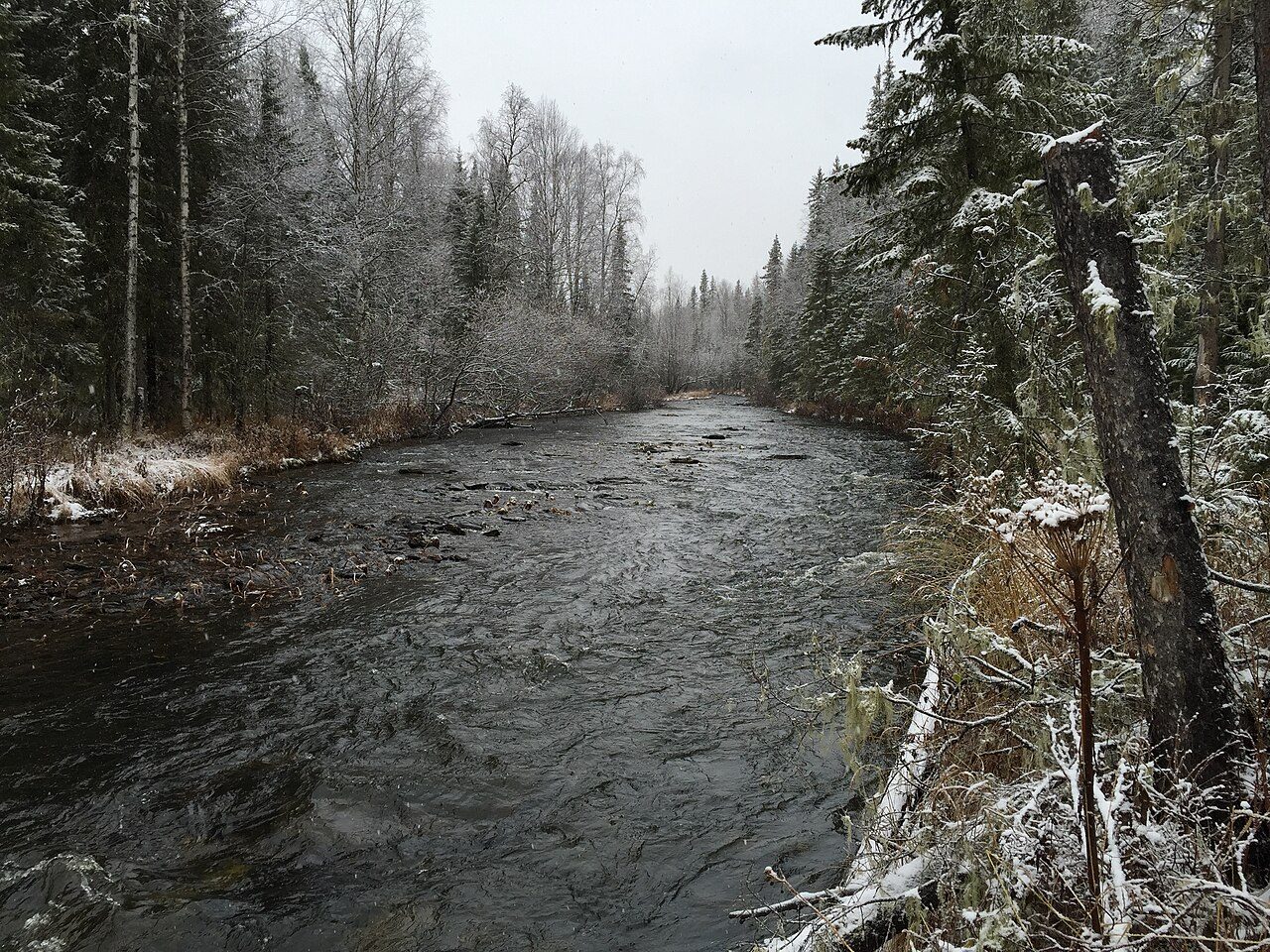
Futball80 (Wikimedia Commons), 7 October 2015. CC BY-SA 4.0. Picture source
In February 1959 nine Soviet ski hikers died on the slope of Kholat Syakhl in the northern Urals. This story follows them from their last diary entry to the ravine where the last four were found, using their own diaries and the 1959 case file, and tells the night the way the 2021 avalanche study and the 2020 prosecutors' review reconstruct it.
How to read it: start at chapter 1 and go in order. Each chapter tells the story first, then quotes the record it rests on and says what is actually known.
- 1. The Last Warm Night on the AuspiyaOn 31 January 1959 nine skiers from Sverdlovsk camp in the forest by the Auspiya River, and their leader writes the last entry in the group diary.23 to 31 January 1959
- 2. A Late Start and a Cut in the SnowOn 1 February the group leaves a food cache, starts climbing at three in the afternoon, and digs a flat place for the tent on the open slope of height 1079.1 February 1959, afternoon and early evening
- 3. The Night the Tent Was CutSome hours after dark the nine cut their way out of the tent from the inside and leave almost all their boots and coats behind.Night of 1 to 2 February 1959 (the exact hour is disputed)
- 4. Footprints to the CedarThe nine walk together for about a kilometer and a half down to a large cedar at the edge of the forest, light a fire, and some of them try to go back up.Night of 1 to 2 February 1959
- 5. The Den in the RavineThe last four go a short way into a stream ravine, build a floor of branches in the snow, and are found there in May under deep snow.Night of 1 to 2 February 1959; found 4 to 6 May 1959
- 6. "A Compelling Natural Force"The 1959 case closes without naming a cause, and reviews in 2019 and 2020, then a 2021 scientific study, point to a small avalanche.28 May 1959 to January 2021
- 7. The Questions That RemainThe avalanche account fits much of the record but not all of it, and other explanations still have supporters.1959 to today
This is a reconstruction, not a settled account. Every fact comes from a document listed under each chapter, but what the hikers saw, heard and decided that night is supposed, and the avalanche explanation is still disputed by relatives and researchers.
All sources
- Dyatlov group diaries, 23 January to 31 January 1959, English translation on dyatlovpass.com (Teodora Hadjiyska's archive); copies are in the 1959 case file, sheets 21 to 30
- "Evening Otorten" No. 1, the group's joke leaflet dated 1 February 1959, case file vol. 1 sheet 31, English transcript on dyatlovpass.com
- Resolution to close the criminal case, prosecutor-criminologist L. N. Ivanov, 28 May 1959, case file vol. 1 sheets 384 to 387, English translation on dyatlovpass.com
- Protocol of discovery of the hikers' camp site, Ivdel prosecutor V. I. Tempalov, 28 February 1959, case file vol. 1 sheet 2, English translation on dyatlovpass.com
- Protocol of inspection of the scene (cedar, Dyatlov, Kolmogorova), Tempalov with search leader E. P. Maslennikov, 27 February 1959, case file vol. 1 sheets 3 to 6, English translation on dyatlovpass.com
- Act No. 199, forensic examination of the tent by expert G. E. Churkina, 16 April 1959, case file vol. 1 sheets 303 to 304, English translation on dyatlovpass.com
- Protocol of inspection of the place where the four bodies were found (the ravine and the den), Tempalov, 6 May 1959, case file vol. 1 sheets 341 to 343, English translation on dyatlovpass.com
- Testimony of forensic expert B. A. Vozrozhdenniy, 28 May 1959, case file vol. 1 sheets 381 to 383, English translation on dyatlovpass.com
- Radiation analysis report and testimony of radiologist Levashov, May 1959, case file vol. 1 sheets 371 to 377, English translation on dyatlovpass.com
- "The Search", dyatlovpass.com summary of the 1959 search (Slobtsov's group finds the tent on 26 February 1959)
- NatureThe website of Nature, a weekly science journal founded in London in 1869 and one of the most respected in the world. Its research papers are checked by other experts before they are printed.Johan Gaume and Alexander M. Puzrin, "Mechanisms of slab avalanche release and impact in the Dyatlov Pass incident in 1959", Communications Earth & Environment 2, article 10 (28 January 2021), open access
- TASS, "Prosecutors say avalanche killed Dyatlov group in Urals in 1959", 11 July 2020
- Radio Free Europe/Radio Liberty, "Russian Officials Reportedly Close Investigation Into Mysterious 1959 Hiking Disaster", July 2020 (citing RIA Novosti)
- Nikolay Varsegov and Natalya Varsegova, Komsomolskaya Pravda, 11 July 2020: the Sverdlovsk prosecutors' reconstruction as presented by Andrey Kuryakov, English translation on dyatlovpass.com
- Kommersant-Ural report (2020) that Prosecutor General Igor Krasnov formally warned Andrey Kuryakov over the July 2020 press conference, English translation on dyatlovpass.com
Questions people ask about What If We Could Follow the Dyatlov Group Through Their Last Night?
What happened at Dyatlov Pass?
On the night of 1 to 2 February 1959 nine hikers led by Igor Dyatlov cut their way out of their tent on the slope of Kholat Syakhl and went down toward the forest in deep cold without boots or coats. Six died of the cold and three of severe injuries. Their bodies were found between 26 February and May 1959.
What did the 1959 investigation conclude?
The investigator closed the case on 28 May 1959. He found no other people and no signs of a fight, and wrote that the hikers died from a force they could not overcome, a phrase translated as "overwhelming force" or "a compelling natural force". He did not say what that force was.
Was it an avalanche?
Russia's Investigative Committee in 2019 and the Prosecutor General's Office in July 2020 both named a snow avalanche as the most likely cause. A 2021 study by Johan Gaume and Alexander Puzrin showed how a small slab could have released hours after the group cut into the slope. Critics point out that searchers saw no clear avalanche debris, so the question is not closed.
Why did the Dyatlov hikers leave their tent?
The tent was cut open from the inside and almost all boots and outer clothing were left behind, so the group left suddenly. The avalanche explanation says snow fell on or threatened the tent. Other explanations include strong katabatic winds. The hikers left no record of what they saw.
Was there radiation at Dyatlov Pass?
A 1959 laboratory found slight beta contamination on some clothing, which partly washed off. The 2020 prosecutors linked it to the area of the 1957 Mayak nuclear accident, which two of the hikers had visited.
Updated