Credible Theories Sign in

The record

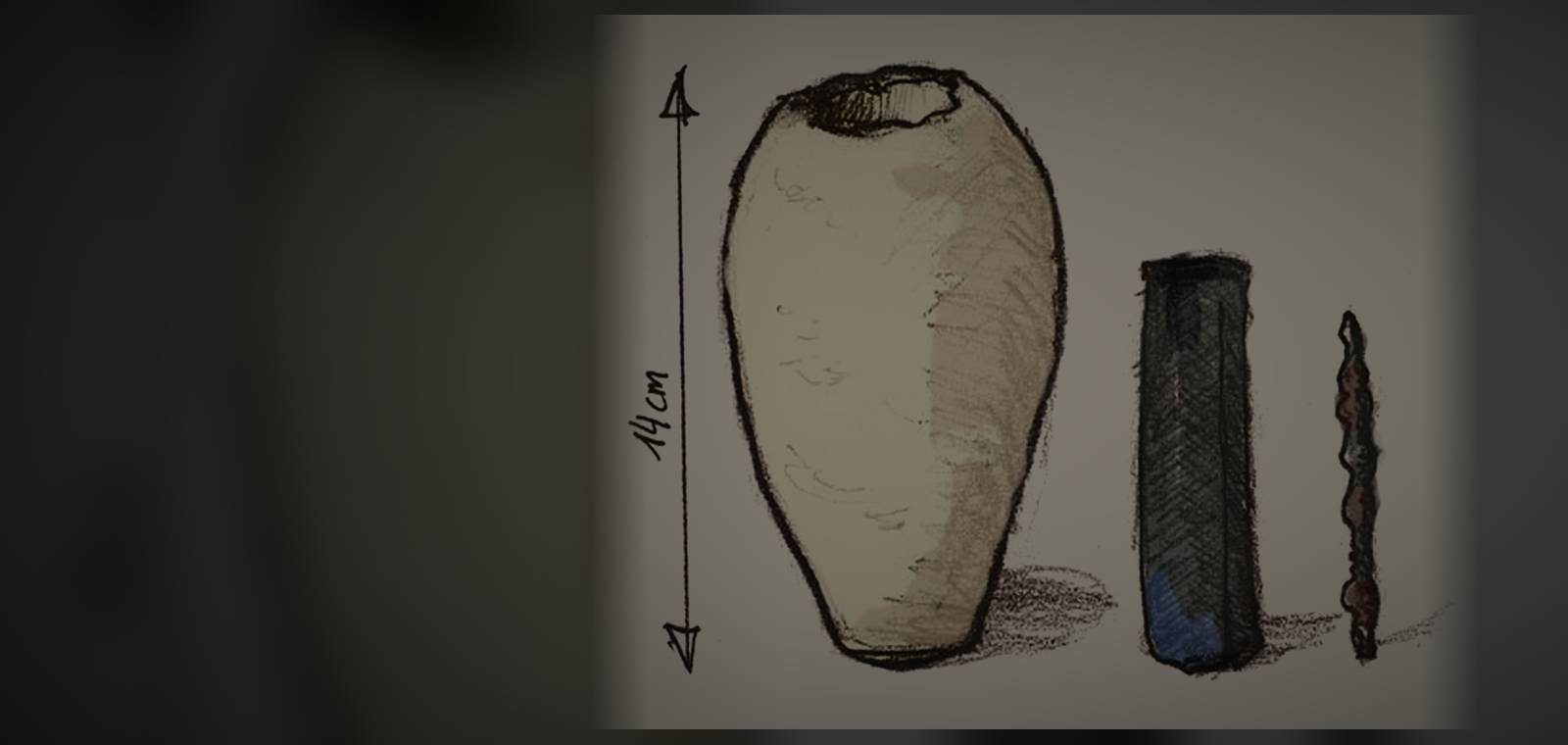
In 1938 Wilhelm König, a German who ran the antiquities department of the Baghdad Museum, published a short paper in the journal Forschungen und Fortschritte titled, in English, A galvanic element from the Parthian period. He described a small clay jar from Khujut Rabu, a Parthian-era site just outside Baghdad, dated to around the first century AD. Inside it sat a copper cylinder, and inside that an iron rod, held in place and kept apart by plugs of asphalt. König proposed that it was an electric cell, more than seventeen centuries before Alessandro Volta built his battery in 1800.

Copper and iron in an acid liquid do produce a small current, and replicas have been tested many times. As IFLScience summarizes the history, the engineer Willard Gray filled a replica with grape juice after World War II and measured a voltage, and the television program MythBusters later tested ten lemon-filled jars together. In 1993 the classicist Paul Keyser argued in the Journal of Near Eastern Studies that such cells could have been used for a mild numbing effect in medicine. Others have suggested electroplating, or a temple trick in which a worshipper touching a statue felt a small shock.

The newest test came in January 2026, when the independent researcher Alexander Bazes published a reconstruction in Sino-Platonic Papers, a University of Pennsylvania series that, by its own description, prints unconventional or controversial work. He argued that earlier copies missed the solder on the copper and the role of the unglazed jar, which together make a second cell, and that the full device gives over 1.4 volts, enough for electroplating, etching and splitting water. He writes that this provides the strongest evidence to date for König's idea that people in the Near East had a working knowledge of electrochemistry.

The other side is just as plain. No wires, conductors or plated objects have been found with the jar, nor any text that mentions electricity, and the dating itself is questioned, with some placing it later, around 225 AD. The chemist Gerhard Eggert, writing in Skeptical Inquirer as quoted by IFLScience, put the general rule this way: successful experiments alone can show only a supposed ancient technique to be possible, but never its application. He favors a reading going back to the excavators themselves, and argued again by Paszthory in 1989: that such jars held blessings or incantations written on something organic that has since rotted away. IFLScience, reporting the 2026 study, concluded that it is best to remain skeptical.

Questions people ask about The Baghdad Battery

Did the Baghdad Battery really work?

Replicas filled with an acid liquid produce a current, and a 2026 reconstruction reported over 1.4 volts. Whether the original was ever used that way is unproven, because no wires or electrical objects were found with it.

How old is the Baghdad Battery?

It comes from the Parthian site of Khujut Rabu near Baghdad and is usually dated to around the first century AD, about 2,000 years ago.

What else could the Baghdad Battery have been?

The main alternative, held by many of the original excavators, is a container for blessings or incantations written on organic material that later decayed. Others have suggested medical numbing, electroplating or a temple trick.

The open question

Still strange: A battery before batteries?.

Rebuilt copies make electricity, but no wires or plated objects have ever been found with it.

The Antikythera Mechanism: What Was Inside the Bronze Lump? →
  1. Step 1 of 4 · This fileThe Baghdad Battery
  2. Step 2 of 4 · Next fileThe Antikythera Mechanism: What Was Inside the Bronze Lump?
  3. Step 3 of 4 · Next fileGreek Fire
  4. Step 4 of 4 · Next fileThe Library of Alexandria
About these videos

Found by a YouTube search for this topic, not checked by us. The player loads from YouTube only when you press play.

Where this comes from

EvidenceAlmost credible

Comes from Wilhelm König, "Ein galvanisches Element aus der Partherzeit", Forschungen und…. Sino-Platonic Papers: Sino-Platonic Papers is a series edited at the University of Pennsylvania. By its own description it prints unconventional or controversial work.

What this means

The jar and its parts are documented and replicas make a current; ancient use for electricity is not on record.

For The Baghdad Battery, there is real evidence, but it does not settle the question (4 sources listed at the bottom of this page). The main doubt: Being able to make a current is not the same as being used to make one.

Serious people have done real work and there is real evidence for the idea, but it falls short of proof. We show what supports it, what is missing and who disagrees.

See all five labels

Sources

  1. Sino-Platonic PapersSino-Platonic Papers is a series edited at the University of Pennsylvania. By its own description it prints unconventional or controversial work.Wilhelm König, "Ein galvanisches Element aus der Partherzeit", Forschungen und Fortschritte 14 (1938), pp. 8-9, as cited by Bazes 2026Primary text
  2. DOI link to a research paperA DOI is a permanent ID number for a published research paper or book. The link takes you to the paper on its publisher's website, even if that site moves. The paper itself is what we cite.Paul T. Keyser, "The Purpose of the Parthian Galvanic Cells: A First-Century A.D. Electric Battery Used for Analgesia", Journal of Near Eastern Studies 52 (1993), pp. 81-98Primary text
  3. Sino-Platonic PapersAlexander Bazes, "The Baghdad Battery: Experimental Verification of a 2,000-Year-Old Device Capable of Driving Visible and Useful Electrochemical Reactions at over 1.4 Volts", Sino-Platonic Papers 377 (January 2026)Primary text
  4. IFLScienceIFLScience is a popular science news site. Its reports summarize new studies and name the papers they come from.James Felton, "Infamous 'Baghdad Battery' Was Capable Of Producing More Power Than We Thought, Controversial Study Suggests", IFLScience (28 January 2026)

Quotations come from public-domain translations. A book in our Library links to its Library page; other links open the free online copy or the reference page.

Updated

Credible or not?

Tap one to see how other readers voted.

Discussion