Credible Theories Sign in

The record

From the text
He was making twenty tripods that were to stand by the wall of his house, and he set wheels of gold under them all, that they might go of their own selves to the assemblies of the gods, and come back again… There were golden handmaids also who worked for him, and were like real young women, with sense and reason, voice also and strength, and all the learning of the immortals.
Documented · Ancient text, c. 750–700 BCE
Iliad 18.373–377, 417–420 · Greece and Rome
Translation: Samuel Butler, The Iliad of Homer (1898) · Public domain

Book 18 of Homer's Iliad describes the workshop of Hephaestus, the lame smith god, when the goddess Thetis visits to ask for new armor for her son Achilles. She finds him making twenty tripods to stand along the wall of his house. He set wheels of gold under them all, that they might go of their own selves to the assemblies of the gods, and come back again.

When Hephaestus gets up to greet her, he is helped along by attendants of his own making. In Samuel Butler's translation, there were golden handmaids also who worked for him, and were like real young women, with sense, voice, strength and skill learned from the gods. Later writers call them the kourai khryseai, the golden maidens.

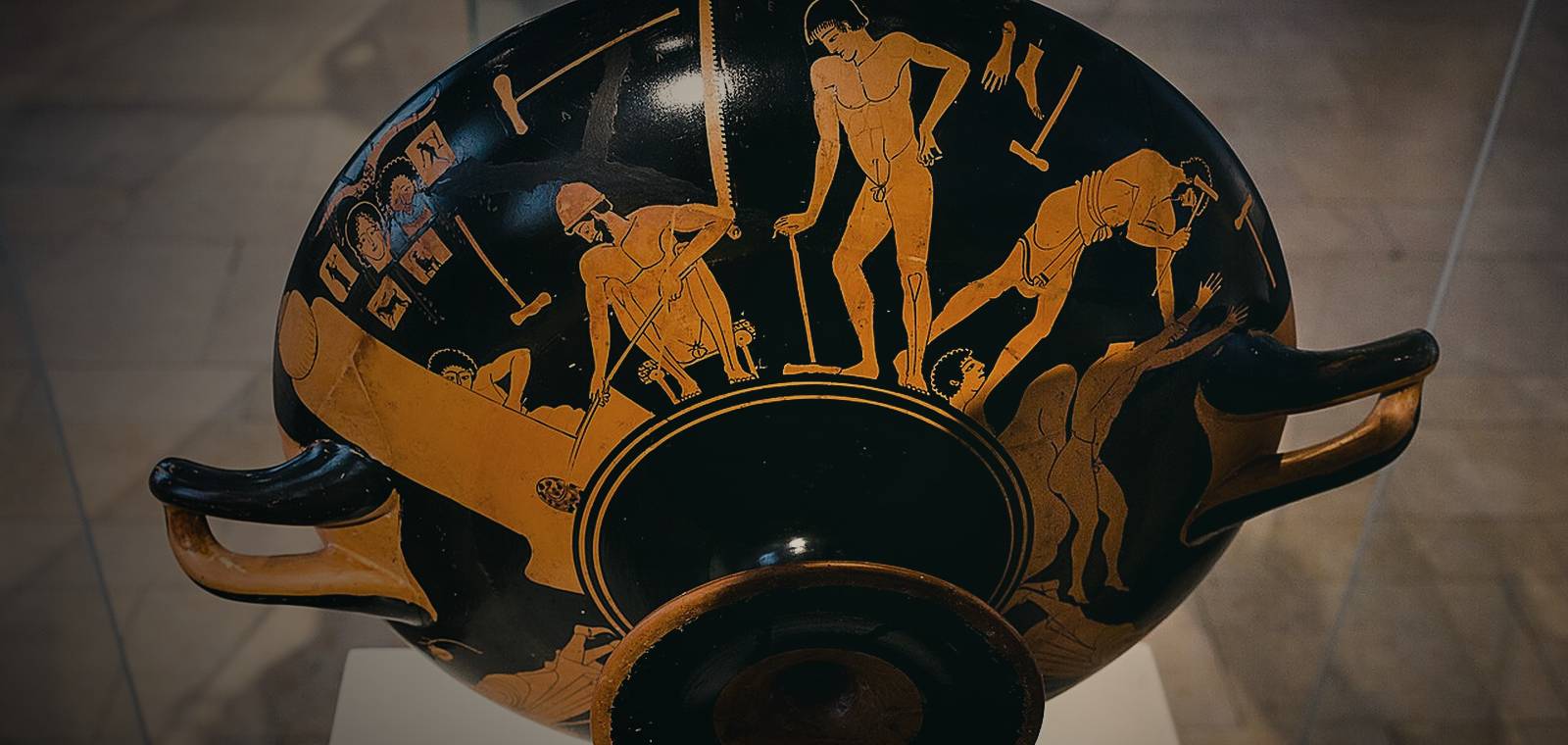
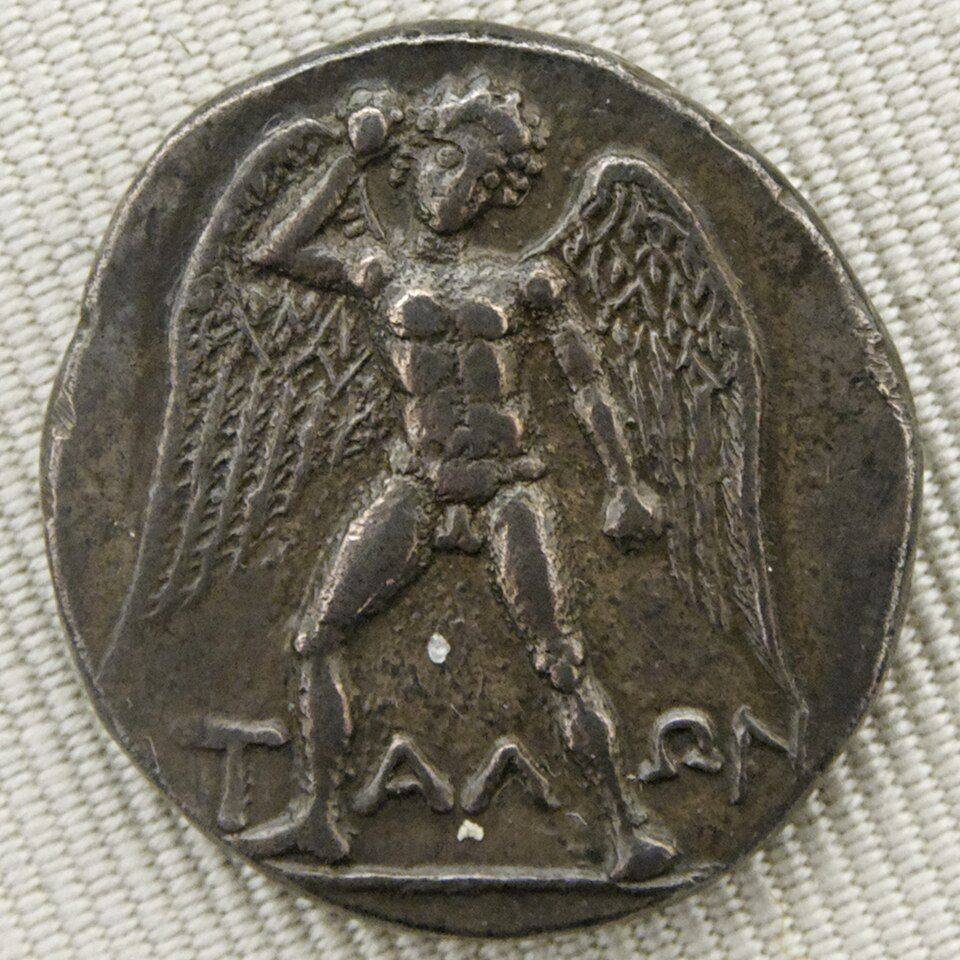
They are not his only animated works. The Odyssey says Hephaestus made gold and silver dogs, immortal and ageless, to guard the palace of King Alcinous. Other stories credit him with Talos, the bronze guardian of Crete, and with Pandora, the first woman, shaped from earth at Zeus's command. Hephaestus is the gods' engineer, and his works are always the most astonishing things on Olympus.

Scholars such as Adrienne Mayor argue that these passages show Greeks imagining artificial life long before anyone could build it: made things that move, reason and serve. That is the attraction for ancient-technology readers, who see in them a memory of real machines. Most classicists read them as expressions of divine craft, a way of showing that a god's handiwork surpasses anything human, and as early science fiction rather than reportage.
Questions people ask about Hephaestus' golden maidens

What did Adrienne Mayor write about the golden maidens?

Mayor, a historian of ancient science at Stanford University, discusses them in her 2018 book Gods and Robots: Myths, Machines, and Ancient Dreams of Technology. She argues that Greek myths about made beings show people thinking about artificial life, and its dangers, centuries before real automatic machines appeared in the Greek world.

What other things did Hephaestus make that moved on their own?

Besides his self-moving tripods and watchdogs, myth gives him bellows that worked at his command and the bronze giant Talos, who circled Crete three times a day. Some versions say Hephaestus also made Prometheus's chains and the golden throne that trapped his own mother, Hera, when she sat on it.

Did the ancient Greeks build real robots?

They built simple automatic devices, though nothing like the golden maidens. In the 1st century CE, Hero of Alexandria described a spinning steam ball, temple doors that opened by themselves, and a puppet theater that ran on weights and ropes. The Antikythera mechanism, a geared bronze calculator from around the 1st or 2nd century BCE, shows how skilled Greek metalwork could be.

The open question

Still strange: The earliest description of intelligent artificial helpers in Greek literature is also a description of assistive technology: the maidens help a disabled god walk.

Talos: The Bronze Giant Who Guarded Crete →
  1. Step 1 of 4 · This fileHephaestus' golden maidens
  2. Step 2 of 4 · The passageHephaestus' golden robots, Iliad 18.373–377, 417–420
  3. Step 3 of 4 · The longer textThe Odyssey (rendered into English prose)
  4. Step 4 of 4 · Next fileTalos: The Bronze Giant Who Guarded Crete
About these videos

Found by a YouTube search for this topic, not checked by us. The player loads from YouTube only when you press play.

Where it turns up

Where this comes from

EvidenceMyth or legend

Comes from Homer, Iliad 18.369–420, trans. Samuel Butler (1898). Homer's Iliad: The Greek epic poem about the anger of the hero Achilles during the war against Troy, credited to Homer and probably composed in the 700s BC. It describes the god Hephaestus's self-moving golden helpers and three-legged stands on wheels. Samuel Butler's English version came out in 1898.

What this means

A story or tradition. It is documented as a story; nothing independent shows it happened.

Hephaestus' golden maidens is known from stories, scripture or tradition. The texts are real and we quote them (for example Homer, Iliad 18.369–420, trans. Samuel Butler (1898)), but nothing outside those texts shows that Hephaestus' golden maidens was real as described.

The page covers something known from myths, scripture or tradition. The texts are real and we quote them, but no independent record shows the events or beings were real.

See all five labels

Sources

  1. Homer's IliadThe Greek epic poem about the anger of the hero Achilles during the war against Troy, credited to Homer and probably composed in the 700s BC. It describes the god Hephaestus's self-moving golden helpers and three-legged stands on wheels. Samuel Butler's English version came out in 1898.Homer, Iliad 18.369–420, trans. Samuel Butler (1898)Primary text Archived copy, 2026-10-03
  2. Homer's OdysseyThe Greek epic poem about the hero Odysseus's ten-year voyage home from the Trojan War, credited to Homer and probably composed around 700 BC. It includes gold and silver watchdogs made by the god Hephaestus. Samuel Butler's English version came out in 1900.Homer, Odyssey 7.91–94, trans. Samuel Butler (1900)Primary text Archived copy, 2026-09-25
  3. WikipediaA free online encyclopedia written and edited by volunteers. It is a good starting point and usually lists its own sources, but anyone can change it, so we treat it as a guide to better sources, not the final word.Wikipedia, "Hephaestus"Reference Archived copy, 2026-09-26
  4. Gods and Robots, by Adrienne Mayor (2018)A 2018 book from Princeton University Press by Adrienne Mayor, a historian of ancient science at Stanford University. It looks at ancient myths about made beings, such as the bronze giant Talos, and what they show about ancient ideas of technology.Adrienne Mayor, Gods and Robots: Myths, Machines, and Ancient Dreams of Technology (Princeton University Press, 2018)Reference

Quotations come from public-domain translations. A book in our Library links to its Library page; other links open the free online copy or the reference page.

Updated

Credible or not?

Tap one to see how other readers voted.

Discussion