












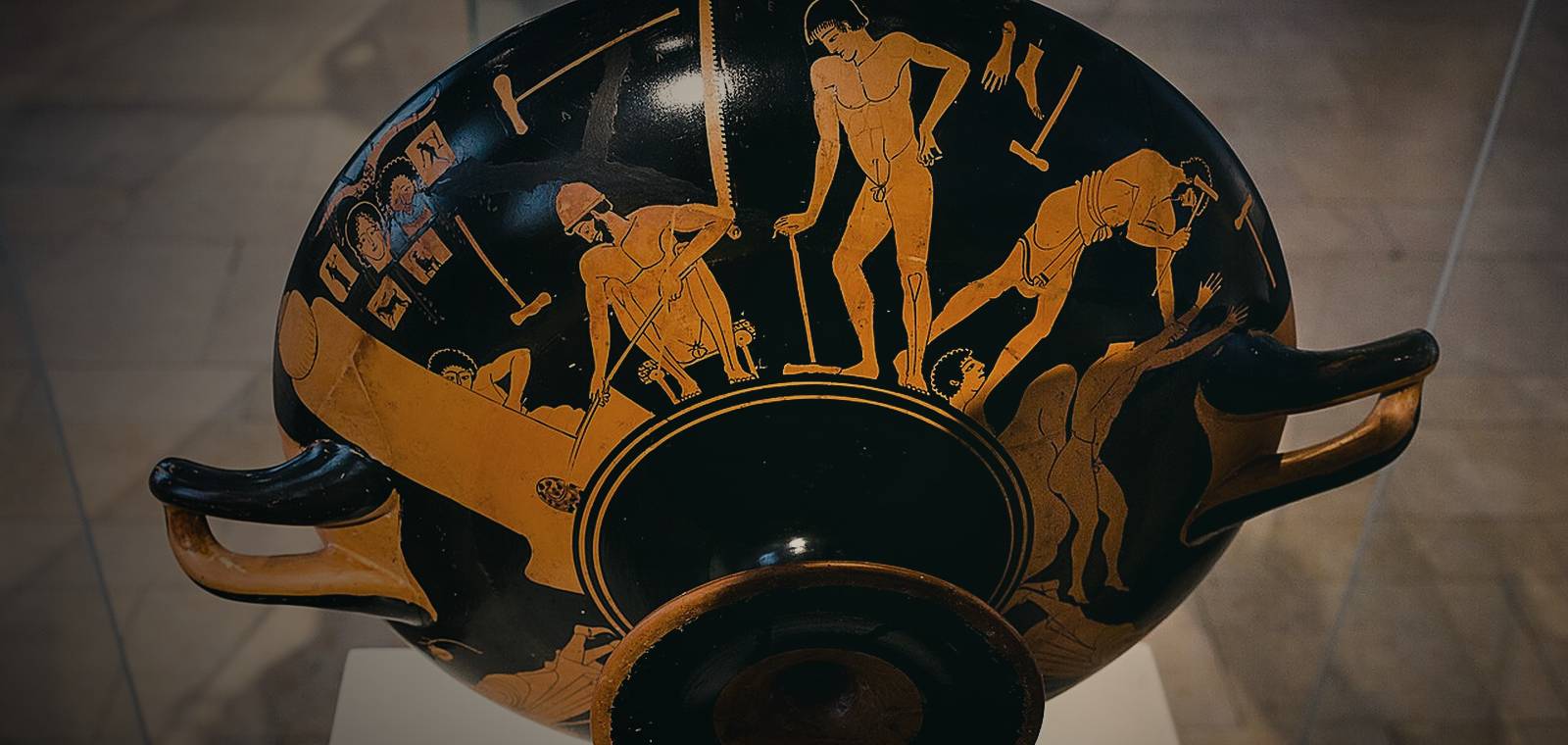
What is Hephaestus known for?
Hephaestus is the Greek god of fire and metalworking, the craftsman of the gods, known to the Romans as Vulcan. Myths say he was lame and that he was thrown from Olympus, and he works at a forge, often placed under volcanoes such as Etna or on the island of Lemnos.
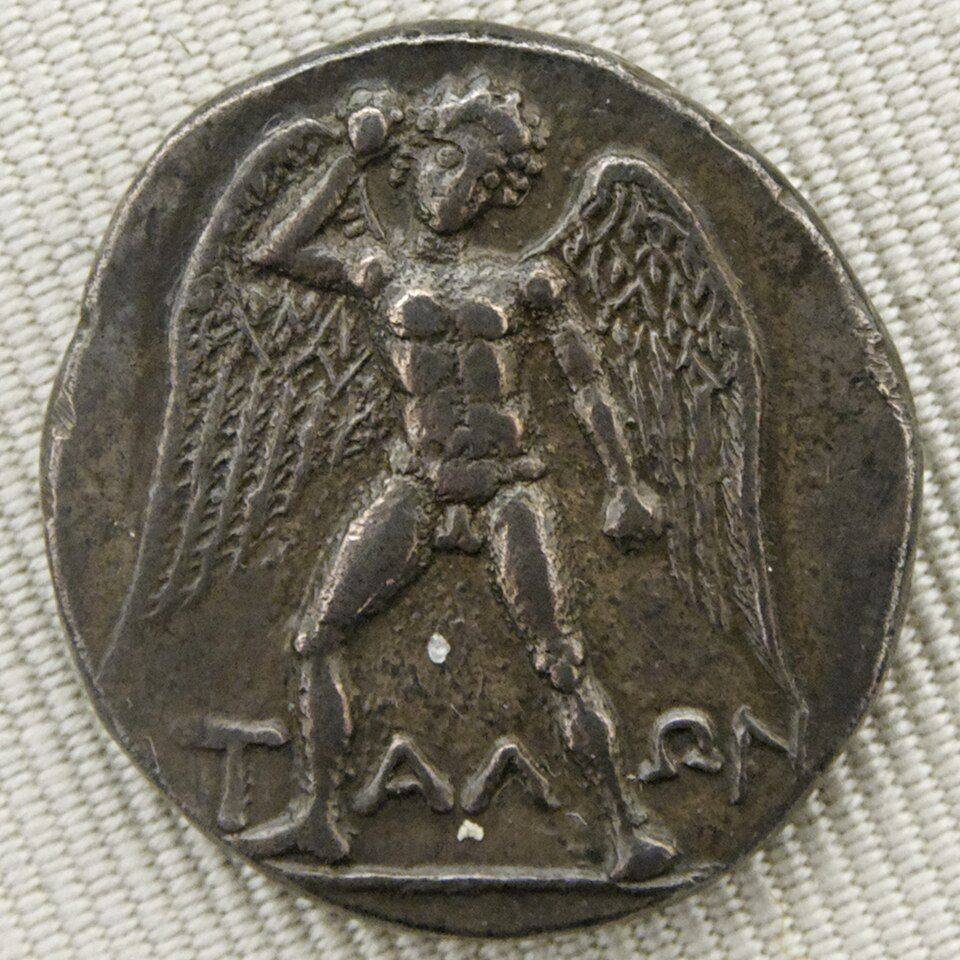
In Homer's Iliad he makes new armor and a shield for Achilles, and he is served by golden maidens who have minds, speech and strength. Later writers credit him with Talos, the bronze giant who guarded Crete, and with self-moving tripods that rolled to the gods' meetings.
Writers on ancient technology often point to these servants as early ideas of robots. On this site they are read as the poets describe them, as stories, not records of machines.
The same story, told elsewhere
Shared story · Beginnings
People Made From Clay: Adam, Nuwa, Prometheus and the Potter Gods
A god kneels in the mud, shapes a body with his hands and breathes it into life. That scene is told in Iraq, Israel, Egypt, Greece, China, Arabia, Guatemala, Sudan and New Zealand.
Apollodorus, The Library (Prometheus makes people) is one telling. The same story is told 8 more times, in 6 parts of the world. Follow it:
- Babylonian (Akkadian)Mesopotamia · c. 1700 BCE · Ancient text
- Ancient EgyptianEgypt · c. 1215 BCE · Ancient text
- Hebrew BibleJudah · c. 900-450 BCE · Ancient text
- GreekGreece · 1st or 2nd century CE · Ancient textTied to this page
- ChineseChina · c. 195 CE · Retold in English
- IslamArabia · 7th century CE · Medieval text
- K'iche' MayaHighland Guatemala · c. 1554-1558 · Retold in English
- Maori (New Zealand)Aotearoa · 19th century · Retold in English
- Shilluk (South Sudan)White Nile, South Sudan · 1911 · Retold in English
The open question: Did one old story about a potter god travel from people to people, or does anyone who works with clay end up imagining that we were made from it? Join the debate
Mentioned on these pages
- FileHephaestus' golden maidens
- FileTalos
- FileThe reversed world of Plato's Statesman
- PassageHephaestus' golden robots (Iliad 18.373–377, 417–420)
- PersonAchilles
- PersonAdrienne Mayor
- PersonApollodorus (the Bibliotheca)
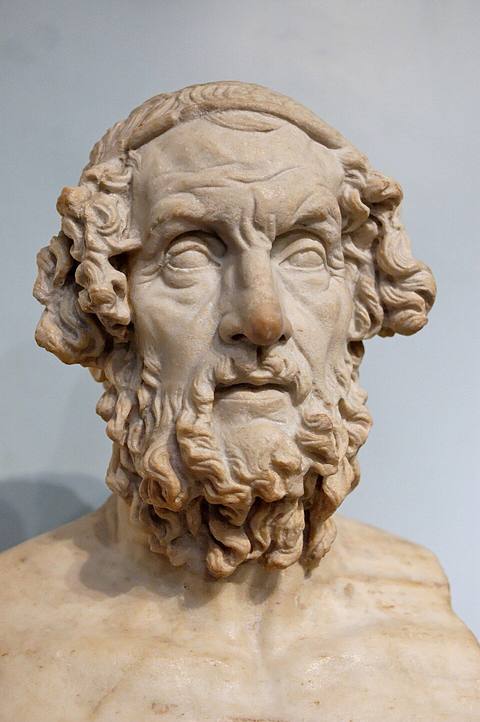
- PersonHomer
- PersonMinos
- PersonSamuel Butler
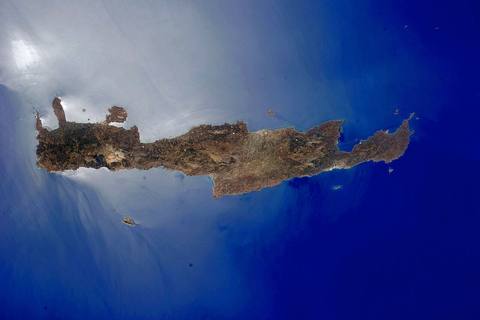
- PlaceCrete
- PlaceMount Olympus
Linked people and places
Where this comes from
Comes from Homer, Iliad, Book 18, trans. A. T. Murray (Loeb, 1924). Homer's Iliad: The Greek epic poem about the anger of the hero Achilles during the war against Troy, credited to Homer and probably composed in the 700s BC. It describes the god Hephaestus's self-moving golden helpers and three-legged stands on wheels. Samuel Butler's English version came out in 1898.
What this means
A story or tradition. It is documented as a story; nothing independent shows it happened.
Hephaestus is known from stories, scripture or tradition. The texts are real and we quote them (for example Homer, Iliad, Book 18, trans. A. T. Murray (Loeb, 1924)), but nothing outside those texts shows that Hephaestus was real as described.
The page covers something known from myths, scripture or tradition. The texts are real and we quote them, but no independent record shows the events or beings were real.
Sources
- Homer's IliadThe Greek epic poem about the anger of the hero Achilles during the war against Troy, credited to Homer and probably composed in the 700s BC. It describes the god Hephaestus's self-moving golden helpers and three-legged stands on wheels. Samuel Butler's English version came out in 1898.Homer, Iliad, Book 18, trans. A. T. Murray (Loeb, 1924)Primary text
- Encyclopaedia BritannicaAn encyclopedia first published in Scotland in 1768 and now online. Its articles are written and checked by named experts and editors, which makes it a reliable source for basic facts.Encyclopaedia Britannica, 'Hephaestus'Reference
- Gods and Robots, by Adrienne Mayor (2018)A 2018 book from Princeton University Press by Adrienne Mayor, a historian of ancient science at Stanford University. It looks at ancient myths about made beings, such as the bronze giant Talos, and what they show about ancient ideas of technology.Adrienne Mayor, Gods and Robots: Myths, Machines, and Ancient Dreams of Technology (Princeton University Press, 2018)
No public-domain picture of this person yet. We do not show drawn or generated likenesses.