How the rabbit hole works. Start with anything that grabs you, say UFOs. Every person, place and document a page mentions links to its own page, so a UFO file leads to a witness, the witness leads to the people who investigated the case, and it keeps going.
The path you take shows in the bar under the top menu on every page, so you can step back any time or climb out and start again.
This is a short passage from Homer's Iliad, a Greek poem about the war against Troy, probably composed in the 700s BCE. It describes the god Hephaestus at work. He builds three-legged stands on golden wheels that roll to the gods' meetings by themselves. He also has golden female helpers who can think, speak and work like real young women.
ReferenceIliad 18.373–377, 417–420
Writtenc. 750–700 BCE
SetTrojan War
He was making twenty tripods that were to stand by the wall of his house, and he set wheels of gold under them all, that they might go of their own selves to the assemblies of the gods, and come back again… There were golden handmaids also who worked for him, and were like real young women, with sense and reason, voice also and strength, and all the learning of the immortals.
Questions people ask about Iliad 18.373–377, 417–420
Why does Thetis visit Hephaestus in Iliad 18?
Thetis comes to ask for new armor for her son Achilles. His old armor was lost when Hector killed Patroclus and stripped it from his body. Hephaestus agrees gladly, because Thetis once saved him after he was thrown down from Olympus. He then forges the famous Shield of Achilles, decorated with scenes of cities, farms and dancing.
Who wrote the Iliad?
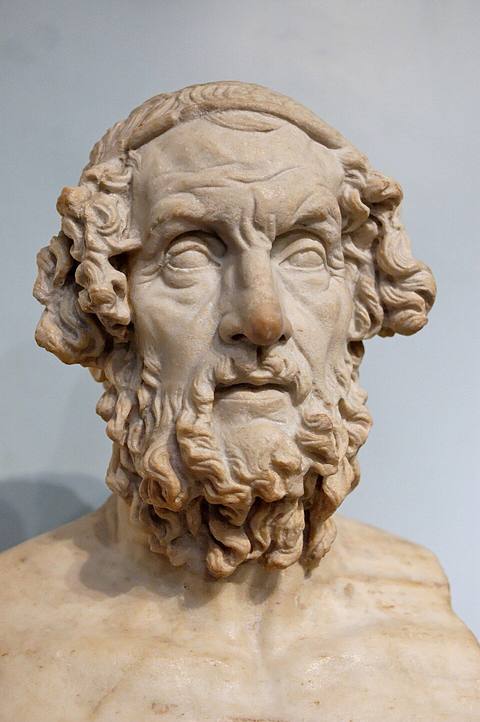
Ancient Greeks credited the Iliad to Homer, but almost nothing certain is known about him. Many scholars think the poem grew out of a long tradition of oral poetry before it was written down. It has 24 books and about 15,700 lines, and covers only a few weeks in the tenth year of the Trojan War.
Are there other self-moving machines in Greek myth?
Yes. In the Odyssey, gold and silver dogs made by Hephaestus guard the palace of King Alcinous, and the Phaeacian ships steer themselves by their sailors' thoughts. The bronze giant Talos of Crete is another example. Historian Adrienne Mayor collected these stories in her 2018 book Gods and Robots.
Used on these files
Hephaestus' Golden Maidens: Artificial Helpers in the IliadMyth or legendIn the oldest Greek epic, the smith god Hephaestus has tripods that roll to meetings on their own, plus golden women with minds, voices and skill who help him walk. This was written about 700 BCE or earlier. Did Greeks imagine artificial helpers long before machines, or is it only divine craft? Read Homer's lines.
Where this comes from
EvidenceDocumented
Comes fromHomer's Iliad, Iliad 18.373–377, 417–420, read here in the Samuel Butler. The Greek epic poem about the anger of the hero Achilles during the war against Troy, credited to Homer and probably composed in the 700s BC. It describes the god Hephaestus's self-moving golden helpers and three-legged stands on wheels. Samuel Butler's English version came out in 1898.
What this means
The text exists and is quoted from a published translation. What it describes is a separate question.
Primary records exist: an original document, a published text, an official file or a dated report. We link to them. This level says the record exists and what it says, not that every claim in it is true.
Homer's IliadThe Greek epic poem about the anger of the hero Achilles during the war against Troy, credited to Homer and probably composed in the 700s BC. It describes the god Hephaestus's self-moving golden helpers and three-legged stands on wheels. Samuel Butler's English version came out in 1898.Samuel Butler, The Iliad of Homer (1898)Primary textArchived copy, 2026-10-03