













What is Job known for?
The Book of Job tells of a blameless and wealthy man in the land of Uz. In its opening scene, the sons of God come to present themselves before the Lord, and among them is the satan, "the accuser," who suggests that Job is righteous only because he is protected. God allows him to be tested, and Job loses his property, his children and his health. Most of the book is a poetic debate between Job and his friends about why the innocent suffer, ending with God speaking from a whirlwind.
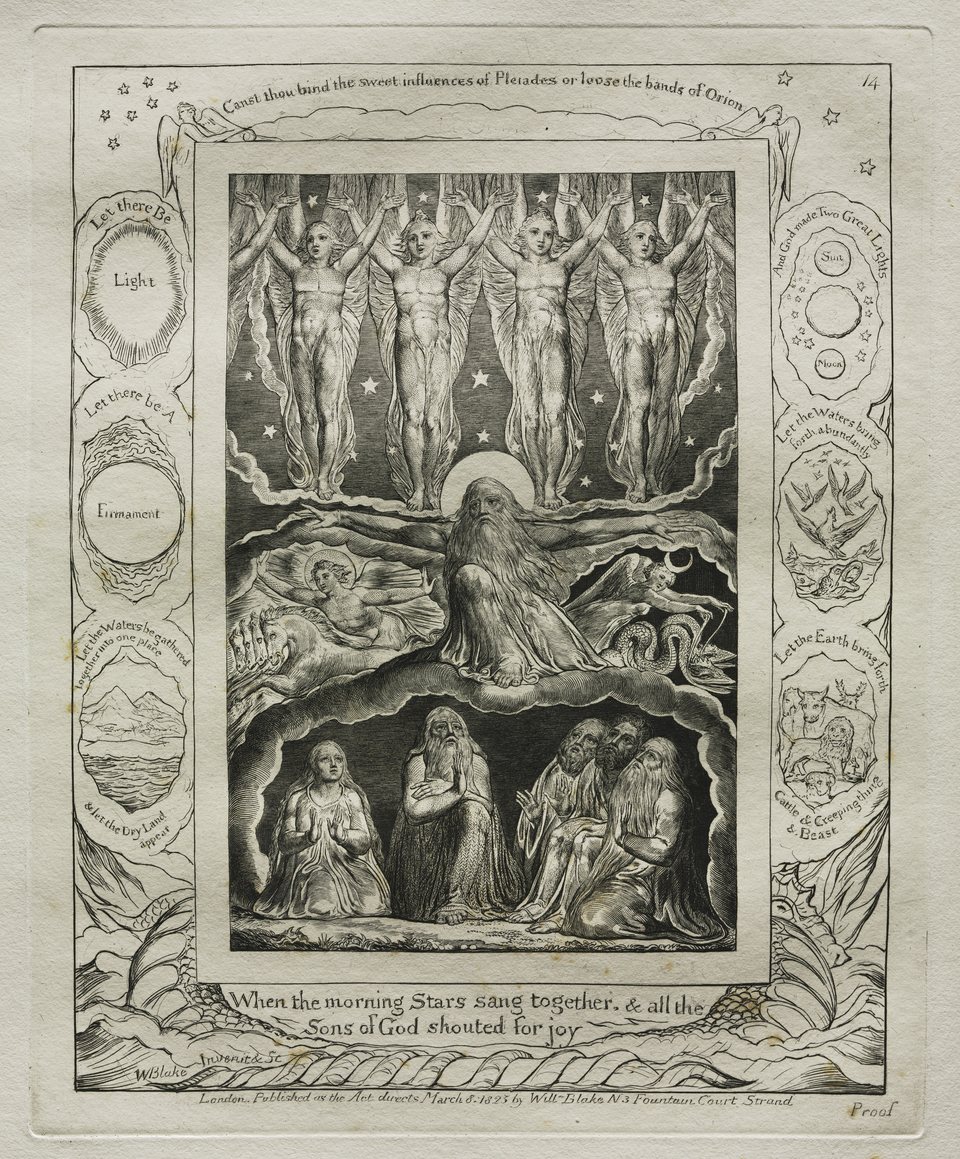
In that speech God asks where Job was when the earth's foundations were laid, "when the morning stars sang together, and all the sons of God shouted for joy" (Job 38:7). The site uses these passages as evidence for a heavenly council of divine beings, and for the satan as a title for an officer of that court rather than a personal name.
Scholars generally treat Job as a literary work rather than a biography, probably written in the Persian period, between about 540 and 330 BCE. Islam honors him as the prophet Ayyub.
Titles and honors
- Titles
- Prophet, in Islam (Quran)
- Saint, feast day 10 May (Roman Catholic)
Mentioned on these pages
Linked people and places
Where this comes from
Comes from Job 1 and 38 (KJV), Bible Gateway. The Book of Job: A book of the Bible, mostly poetry, about a good man named Job who loses everything and argues with God about why. It opens with a scene in God's heavenly court.
What this means
A story or tradition. It is documented as a story; nothing independent shows it happened.
Job is known from stories, scripture or tradition. The texts are real and we quote them (for example Job 1 and 38 (KJV), Bible Gateway), but nothing outside those texts shows that Job was real as described.
The page covers something known from myths, scripture or tradition. The texts are real and we quote them, but no independent record shows the events or beings were real.
Sources
- The Book of JobA book of the Bible, mostly poetry, about a good man named Job who loses everything and argues with God about why. It opens with a scene in God's heavenly court. Scholars usually date it to roughly 600 to 400 BC.Job 1 and 38 (KJV), Bible Gateway Online copyPrimary text Archived copy, 2026-10-03
- WikipediaA free online encyclopedia written and edited by volunteers. It is a good starting point and usually lists its own sources, but anyone can change it, so we treat it as a guide to better sources, not the final word.Wikipedia, 'Job (biblical figure)'Reference Archived copy, 2026-09-30
No public-domain picture of this person yet. We do not show drawn or generated likenesses.