How the rabbit hole works. Start with anything that grabs you, say UFOs. Every person, place and document a page mentions links to its own page, so a UFO file leads to a witness, the witness leads to the people who investigated the case, and it keeps going.
The path you take shows in the bar under the top menu on every page, so you can step back any time or climb out and start again.
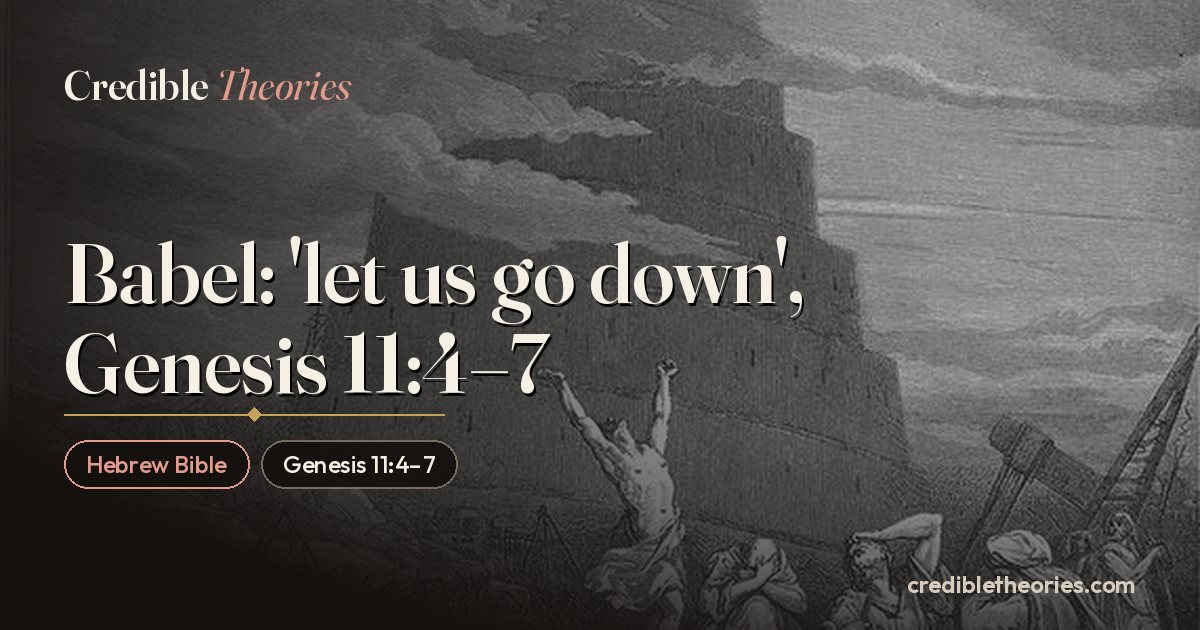
This is a short passage from Genesis, the first book of the Bible, written roughly 900 to 500 BCE. In the story, people after the Flood try to build a city and a tower that reaches to heaven. God comes down to see it and says "let us go down" to mix up their language. Scholars read the "us" as God speaking to a heavenly council.
ReferenceGenesis 11:4–7
Writtenc. 900–500 BCE
SetAfter the Flood, Mesopotamia
Go to, let us build us a city and a tower, whose top may reach unto heaven… And the LORD came down to see the city and the tower… Go to, let us go down, and there confound their language, that they may not understand one another's speech.
Documented · Ancient text, c. 900–500 BCE Translation: KJV
AdvertisementAd space
Read it literally
A group descends to inspect a project and scrambles human communication so people cannot cooperate at scale. That is a policy decision by a council, not a lone act.
What scholars say
Usually read as a story about Babylon's ziggurats; the plural 'us' is read as God speaking to a heavenly council.
Babel is the famous one, but Babylonians, Greeks, the Quran, Mexico, China and the Zambezi all tell of people trying to build or climb their way up to the gods, and failing.
Genesis 11 (Babel) is one telling. The same story is told 7 more times, in 5 parts of the world. Follow it:
The open question: Is the tower story about one real building, about pride, or about why people speak different languages? Join the debate
Questions people ask about Genesis 11:4–7
Where is the Tower of Babel story in the Bible?
It fills Genesis 11:1 to 9, just nine verses, set between the list of nations in Genesis 10 and the family line of Shem that leads to Abram. Most scholars assign it to the Yahwist source. The text ties the name Babel to the Hebrew word balal, to confuse, while in Akkadian the city's name, Bab-ilim, meant gate of the god.
Was the Tower of Babel a real building?
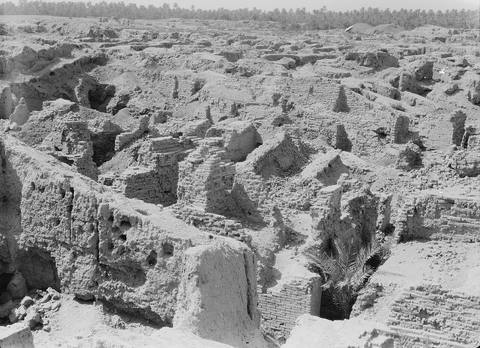
Many historians link the story to Etemenanki, the great stepped temple of Marduk in Babylon. Its square base measured about 91 meters on each side. King Nebuchadnezzar II finished rebuilding it in the 500s BCE, around the time Judean exiles lived in Babylon. Alexander the Great later had it cleared for rebuilding, and today only its foundations survive.
Is there an older story like the Tower of Babel?
A Sumerian epic called Enmerkar and the Lord of Aratta contains a passage often called the spell of Nudimmud. It describes a time when all people spoke one language and says the god Enki changed the speech in their mouths. Christian readers also see a reversal of Babel in Acts 2, where the apostles speak and crowds from many nations understand them.
Where this comes from
EvidenceDocumented
Comes fromThe Book of Genesis, Genesis 11:4–7, read here in the King James Version. The first book of the Bible, telling of Creation, Adam and Eve, Noah's Flood and the families of Abraham, Isaac and Jacob. Scholars think it was written and edited over several centuries and finished by roughly 500 to 400 BC. The oldest surviving copies are pieces of the Dead Sea Scrolls.
What this means
The text exists and is quoted from a published translation. What it describes is a separate question.
Primary records exist: an original document, a published text, an official file or a dated report. We link to them. This level says the record exists and what it says, not that every claim in it is true.
The King James BibleThe English Bible made for King James I and first printed in 1611; the wording most people know comes from a 1769 update. It is out of copyright, which is why we quote it. The 1611 printing also had the Apocrypha, extra books kept in Catholic and Orthodox Bibles.King James Version (1611; standard 1769 text), with ApocryphaPrimary textArchived copy, 2026-10-03
Scholarly dates are rounded. The wording follows the named public-domain translation.
More from Hebrew Bible
The story before and after this one, and what each shares with Babel: 'let us go down'.
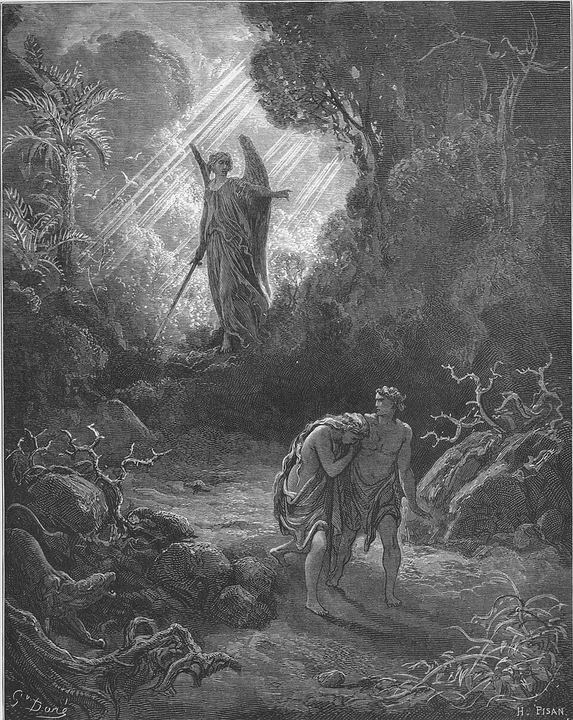
After God drives the first man out of the garden of Eden, the text says he places cherubim at its east side, along with a flaming sword that turns every way.













 Babylon