Credible Theories Sign in
Hebrew Bible · Genesis 3:22

'Lest he… live for ever', Genesis 3:22

Share

In plain words

This is a short passage from Genesis, the first book of the Bible, likely written around 900 to 500 BCE. In the Garden of Eden, God says the man has become "as one of us," knowing good and evil. He must now be kept from eating from the tree of life, so he will not live forever. Scholars read it as a story about human limits.

ReferenceGenesis 3:22
Writtenc. 900–500 BCE
SetEden
Behold, the man is become as one of us, to know good and evil: and now, lest he put forth his hand, and take also of the tree of life, and eat, and live for ever.

Documented · Ancient text, c. 900–500 BCE Translation: KJV

Read it literally

'One of us' again. Humans are deliberately kept from long life, the same thing that happens to Adapa in Babylon.

What scholars say

Read as a story about human limits.

Themes Council of gods Strange time Looks like technology
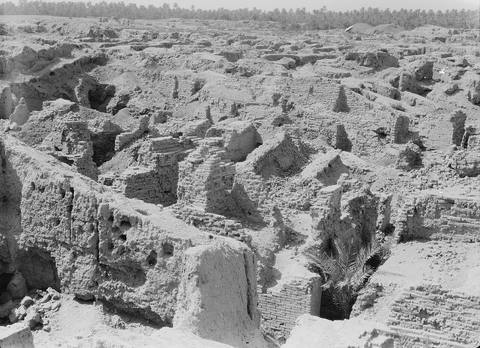
People and places hereBabylon
The same story, told elsewhere

Shared story · Death and return

How Death Came: Eden, Adapa and the Chameleon

Again and again, people almost lived forever. A man refuses the food of life, a snake steals the plant of youth, a slow chameleon arrives too late, and a woman throws a stone that sinks. Each time, the chance was lost.

Genesis 3 (the tree of life) is one telling. The same story is told 8 more times, in 6 parts of the world. Follow it:

  1. Babylonian (Akkadian)Mesopotamia · c. 1400-1350 BCE · Ancient text
  2. Babylonian (Akkadian)Mesopotamia · c. 1200-1000 BCE · Ancient text
  3. Hebrew BibleJudah / Babylon · c. 900-500 BCE · Ancient textTied to this page
  4. GreekBoeotia, Greece · c. 700 BCE · Ancient text
  5. Japanese (Shinto)Japan · 712 CE · Medieval text
  6. Khoikhoi (South Africa / Namibia)Southern Africa · 1800 · Recorded folklore
  7. Maori (New Zealand)New Zealand · 1840 · Recorded folklore
  8. Zulu (South Africa)Natal · 1868-1870 · Recorded folklore
  9. Blackfoot (Plains)Northern Great Plains · 1892 · Recorded folklore

The open question: Do these stories share one ancient source, or does every people eventually ask why we die and arrive at the same kind of answer? Join the debate

Questions people ask about Genesis 3:22

Who is 'us' in Genesis 3:22?

The text does not say. Many Jewish readers understand it as God speaking to the angels or his heavenly court. Early Christian writers often saw a hint of the Trinity. Others explain it as a plural of majesty, the way a king might speak. Genesis 1:26 and 11:7 use a similar plural, so readers usually explain all three together.

What is the Babylonian myth of Adapa?

Adapa, a wise man of the city of Eridu, breaks the wing of the south wind and is called before the sky god Anu. The god Ea warns him not to eat or drink there, saying it will be the food and water of death. Anu instead offers food and water of life, and Adapa refuses, losing immortality. One copy was found in Egypt among the Amarna letters.

Does the tree of life appear again in the Bible?

Yes. Proverbs uses it as a picture of wisdom, calling wisdom a tree of life to those who hold her. At the end of the Bible, Revelation 22 places the tree of life beside the river in the New Jerusalem, bearing fruit every month, with leaves for the healing of the nations. Access to it is restored to the faithful.

Used on these files

  • Adapa: The Wise Man Who Turned Down Immortality Myth or legendA wise man was offered the bread and water of eternal life in heaven and refused, on his own god's advice. The best copy of his story was dug up in Egypt, in the royal archive of Akhenaten; scholars still debate whether Ea's advice was an honest mistake or a deliberate trick. What really happened in that hall?

Where this comes from

EvidenceDocumented

Comes from The Book of Genesis, Genesis 3:22, read here in the King James Version. The first book of the Bible, telling of Creation, Adam and Eve, Noah's Flood and the families of Abraham, Isaac and Jacob. Scholars think it was written and edited over several centuries and finished by roughly 500 to 400 BC. The oldest surviving copies are pieces of the Dead Sea Scrolls.

What this means

The text exists and is quoted from a published translation. What it describes is a separate question.

Primary records exist: an original document, a published text, an official file or a dated report. We link to them. This level says the record exists and what it says, not that every claim in it is true.

See all five labels

Sources

  1. The King James BibleThe English Bible made for King James I and first printed in 1611; the wording most people know comes from a 1769 update. It is out of copyright, which is why we quote it. The 1611 printing also had the Apocrypha, extra books kept in Catholic and Orthodox Bibles.King James Version (1611; standard 1769 text), with ApocryphaPrimary text Archived copy, 2026-10-03
  2. The Story of AdapaA Babylonian myth in which Adapa, a wise man of the city of Eridu, is called up to heaven and refuses food and drink that would have made him live forever. Parts were found among the Amarna letters in Egypt, discovered in 1887, and in the library of King Ashurbanipal at Nineveh.Adapa and the Food of Life, trans. R. W. Rogers, Cuneiform Parallels to the Old Testament (1912)Primary text Archived copy, 2026-10-03

Scholarly dates are rounded. The wording follows the named public-domain translation.

More from Hebrew Bible

The story before and after this one, and what each shares with 'Lest he… live for ever'.

Photo credits
‹ Before this'Let us make man in our image'Genesis 1:26; 2:7

God says "Let us make man in our image," and then forms the first man from the dust of the ground and breathes life into his nose.

Same theme: Council of godsSame theme: Looks like technology
Photo credits
Next ›Lifespans cut to 120 yearsGenesis 5; 6:3

Before the Flood, people in the story live very long lives, and Methuselah reaches 969 years.

Same theme: Strange time

Updated

Discussion