Credible Theories Sign in
Hebrew Bible · Genesis 5; 6:3

Lifespans cut to 120 years, Genesis 5

Share

In plain words

This is a short passage from Genesis, the first book of the Bible, likely written around 900 to 450 BCE. Before the Flood, people in the story live very long lives, and Methuselah reaches 969 years. Then God says humans are flesh, and their days will be 120 years. Scholars compare this to a Sumerian list of kings whose long reigns also drop after a flood.

ReferenceGenesis 5; 6:3
Writtenc. 900–450 BCE
SetBefore the Flood
My spirit shall not always strive with man, for that he also is flesh: yet his days shall be an hundred and twenty years.

Documented · Ancient text, c. 900–450 BCE Translation: KJV

Read it literally

Methuselah lives 969 years; afterward the ages fall steadily. A limit imposed right after the Watchers episode, as if on purpose.

What scholars say

The long ages parallel the Sumerian King List's long reigns, which also drop after the Flood.

Themes Strange time Giants and hybrids
The same story, told elsewhere

Shared story · Floods and lost lands

Flood Stories Around the World

A god warns one good man, a boat is built, the world drowns and birds are sent out to find land. The same story turns up from Iraq to India to Greece, with cousins in China, Scandinavia and Guatemala.

Genesis 6 to 9 (Noah) is one telling. The same story is told 9 more times, in 6 parts of the world. Follow it:

  1. Vedic IndiaNorthern India · c. 800-600 BCE · Ancient text
  2. Babylonian (Akkadian)Mesopotamia · 7th century BCE · Ancient text
  3. Hebrew BibleJudah / Babylon · c. 600-400 BCE · Ancient textTied to this page
  4. ChineseYellow River valley, China · 1st millennium BCE · Ancient text
  5. Zoroastrian (Persian)Iran / Central Asia · 1st millennium BCE · Ancient text
  6. Babylonian, retold in GreekBabylon · c. 280 BCE · Ancient text
  7. GreekGreece · 1st or 2nd century CE · Ancient text
  8. IslamArabia · 7th century CE · Medieval text
  9. NorseIceland · c. 1220 CE · Medieval text
  10. K'iche' MayaHighland Guatemala · c. 1554-1558 · Retold in English

The open question: One real flood remembered by many peoples, or many different floods that each people told in its own way? Join the debate

Questions people ask about Genesis 5

Does Genesis 6:3 limit lifespans or start a countdown?

Readers have taken it both ways. Some see a new upper limit on human life, which fits Moses dying at exactly 120 in Deuteronomy 34:7. Many Jewish commentators, including Rashi, read it instead as 120 years of warning before the Flood. Since people after the Flood still live far longer than 120 in Genesis, the second reading is popular.

How long do people live after the Flood in Genesis?

Ages drop step by step. Noah's son Shem lives 600 years. Abraham dies at 175, Isaac at 180, Jacob at 147 and Joseph at 110. By the time of the Psalms, Psalm 90 speaks of a normal life as seventy years, or eighty for the strong, much closer to real human experience.

Why do the ages in Genesis 5 differ between Bible versions?

The Hebrew text, the Greek Septuagint and the Samaritan Pentateuch give different numbers. The Septuagint often adds 100 years to a father's age when his son is born. As a result, the time from Adam to the Flood is 1,656 years in the Hebrew text but over 2,200 years in the Greek. Early Christian writers who used the Greek dated the world older.

Used on these files

  • Methuselah: How Old Was He, and What Did Enoch Leave Him? Myth or legendIf you add up the ages in the standard Hebrew text, the oldest man in the Bible dies in the very year of the Flood. Methuselah lived 969 years. In the Enoch books he does something odder: he travels to "the ends of the earth" to ask his vanished father about a glowing baby. What did Enoch tell him?
  • Sumerian King List: Why Did Early Kings Reign for Millennia? DocumentedThe first eight kings in this cuneiform list reign for a combined 241,200 years, and one is credited with 43,200 years alone; kingship, it says, "descended from heaven" at Eridu, and later "the flood swept over." Historians read the numbers as symbols and the list as propaganda. Propaganda for whom?
  • The Watchers: Who Were the Fallen Angels of Enoch? Myth or legendThe story says some angels who never sleep came down to a real mountain summit, picked up human wives, and taught people metalworking, spells and astronomy. Their leaders are named, each in charge of ten others. The same word shows up in the Book of Daniel as a heavenly council. So who exactly were the Watchers?

Where this comes from

EvidenceDocumented

Comes from The Book of Genesis, Genesis 5; 6:3, read here in the King James Version. The first book of the Bible, telling of Creation, Adam and Eve, Noah's Flood and the families of Abraham, Isaac and Jacob. Scholars think it was written and edited over several centuries and finished by roughly 500 to 400 BC. The oldest surviving copies are pieces of the Dead Sea Scrolls.

What this means

The text exists and is quoted from a published translation. What it describes is a separate question.

Primary records exist: an original document, a published text, an official file or a dated report. We link to them. This level says the record exists and what it says, not that every claim in it is true.

See all five labels

Sources

  1. The King James BibleThe English Bible made for King James I and first printed in 1611; the wording most people know comes from a 1769 update. It is out of copyright, which is why we quote it. The 1611 printing also had the Apocrypha, extra books kept in Catholic and Orthodox Bibles.King James Version (1611; standard 1769 text), with ApocryphaPrimary text Archived copy, 2026-10-03
  2. The Book of GenesisThe first book of the Bible, telling of Creation, Adam and Eve, Noah's Flood and the families of Abraham, Isaac and Jacob. Scholars think it was written and edited over several centuries and finished by roughly 500 to 400 BC. The oldest surviving copies are pieces of the Dead Sea Scrolls.Genesis 5:21–27, King James Version Online copyPrimary text Archived copy, 2026-10-03
  3. The Sumerian King ListA list of the kings of Sumer and their cities, starting with kings 'before the Flood' who are said to have reigned for tens of thousands of years. It was written down around 2000 to 1800 BC. The best copy, the Weld-Blundell Prism, is in the Ashmolean Museum, Oxford.The Sumerian King List, trans. Electronic Text Corpus of Sumerian Literature (ETCSL t.2.1.1), University of OxfordPrimary text Archived copy, 2026-09-19
  4. The Book of Enoch (1 Enoch)Jewish writings about Enoch, Noah's great-grandfather, the oldest parts from about 300 to 200 BC. It tells of angels called Watchers who came down to earth. Full copies survived only in Ethiopia, whose church still counts it as scripture. Pieces in Aramaic were found among the Dead Sea Scrolls in 1952.1 Enoch 6–8, trans. R. H. Charles, The Book of Enoch (1917) Online copyPrimary text Archived copy, 2026-09-03

Scholarly dates are rounded. The wording follows the named public-domain translation.

More from Hebrew Bible

The story before and after this one, and what each shares with Lifespans cut to 120 years.

Photo credits
‹ Before this'Lest he… live for ever'Genesis 3:22

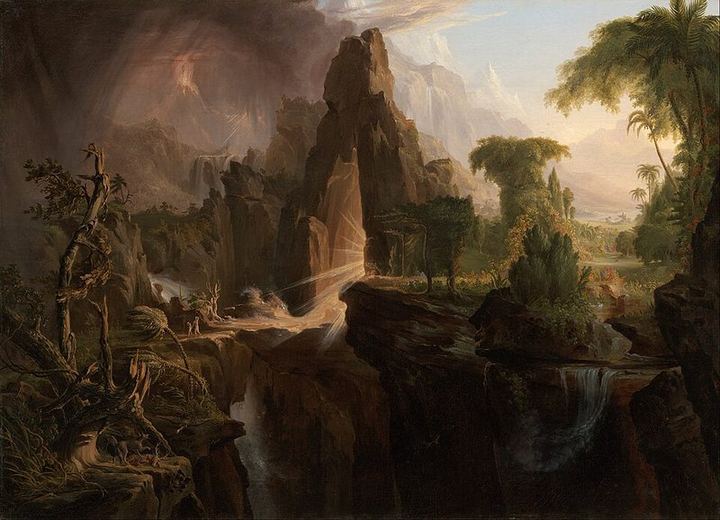
In the Garden of Eden, God says the man has become "as one of us," knowing good and evil.

Same theme: Strange time
Photo credits
Next ›Nimrod, the mighty oneGenesis 10:8–10

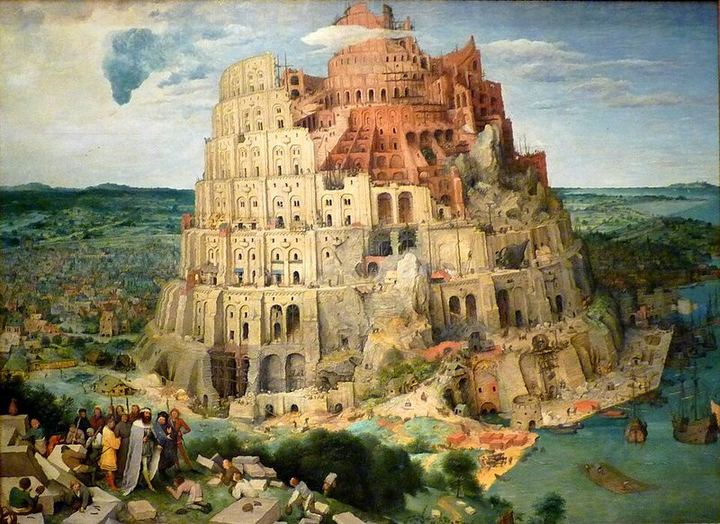
Set after the Flood, it says Nimrod, a son of Cush, "began to be a mighty one" and was a mighty hunter, and his kingdom began at Babel.

Same theme: Giants and hybrids

Updated

Discussion