












Download
Hesiod, the Homeric Hymns, and Homerica
Your file is almost ready. It is free, and the ads on this site pay for hosting it.
AdvertisementAd space
Your download unlocks in a moment.
Hesiod · translated by Hugh G. Evelyn-White. Project Gutenberg record: 'Copyright Status: Public domain in the USA.' Translator Hugh G. Evelyn-White (1884-1924) died 1924; the introduction in the text is dated 9 September 1914.
Back to the page for this file
While you wait
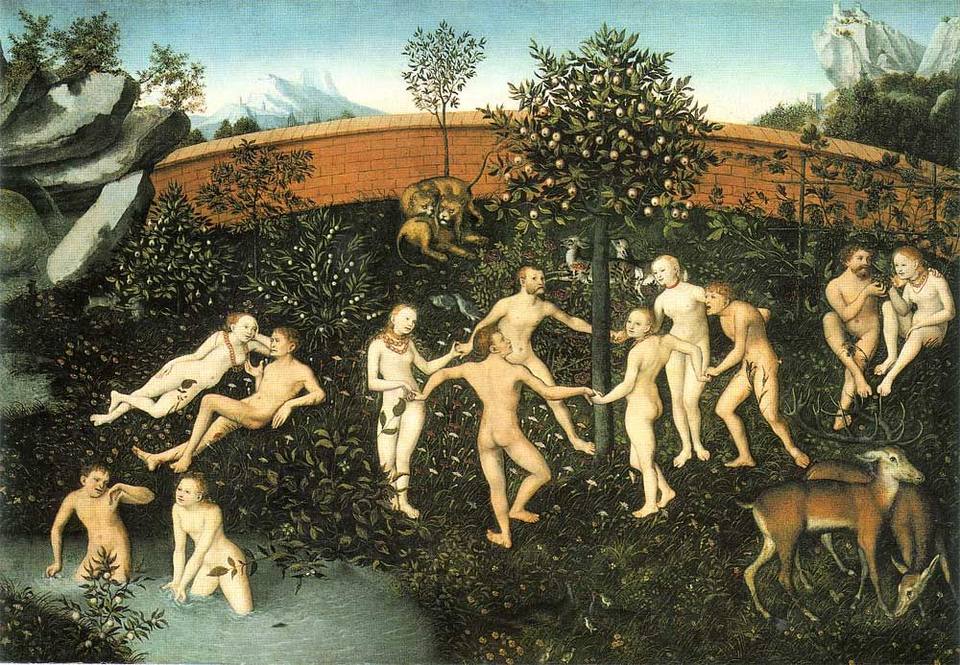 TextHesiod's five races of menDocumentedAround 700 BCE, Hesiod wrote that the gods made humanity five times, from gold down to iron, and ours is the iron race. The silver people stayed children for a hundred years before a short, foolish adulthood. What happened to the earlier races, and what does Hesiod say comes next for us?
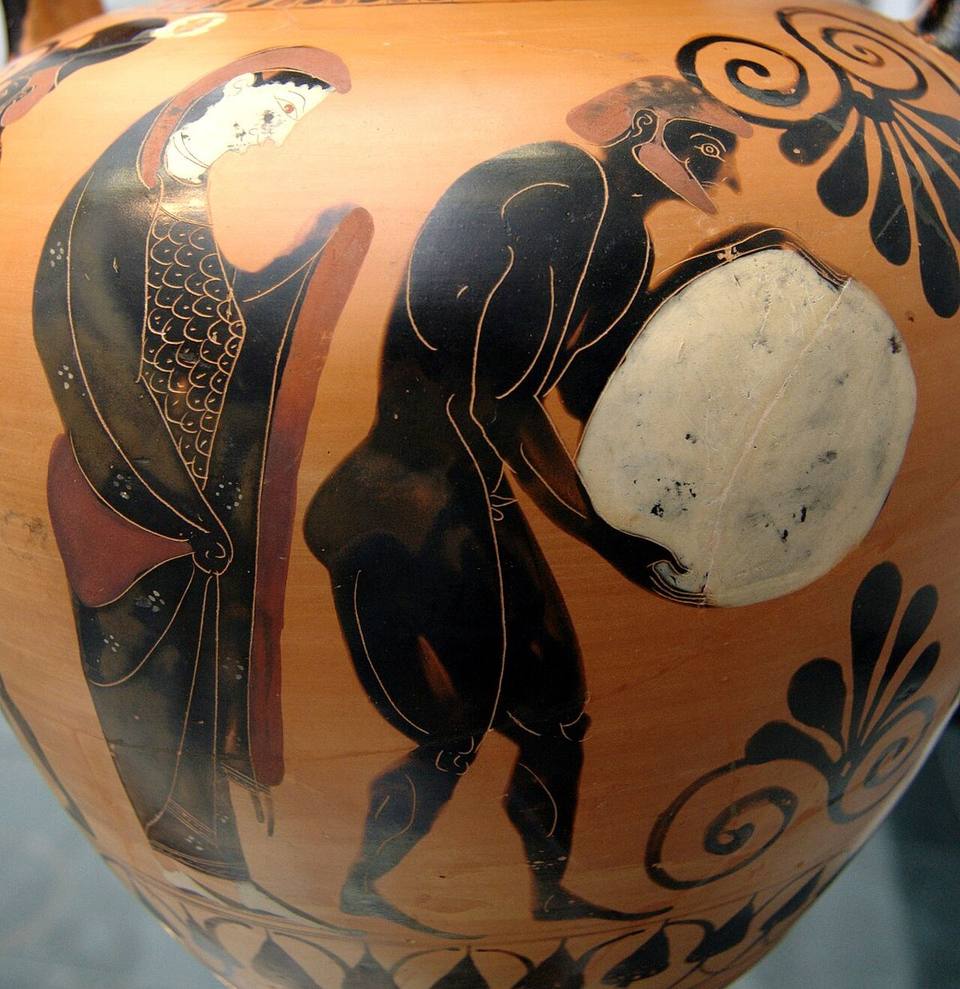 PlaceTartarusMyth or legendHesiod measured the Greek prison for defeated gods with a falling bronze anvil: nine days from sky to earth, nine more to reach it. Centuries later, 2 Peter used the same word for where fallen angels are chained. Why would a Greek pit show up in the New Testament? The page follows the trail.
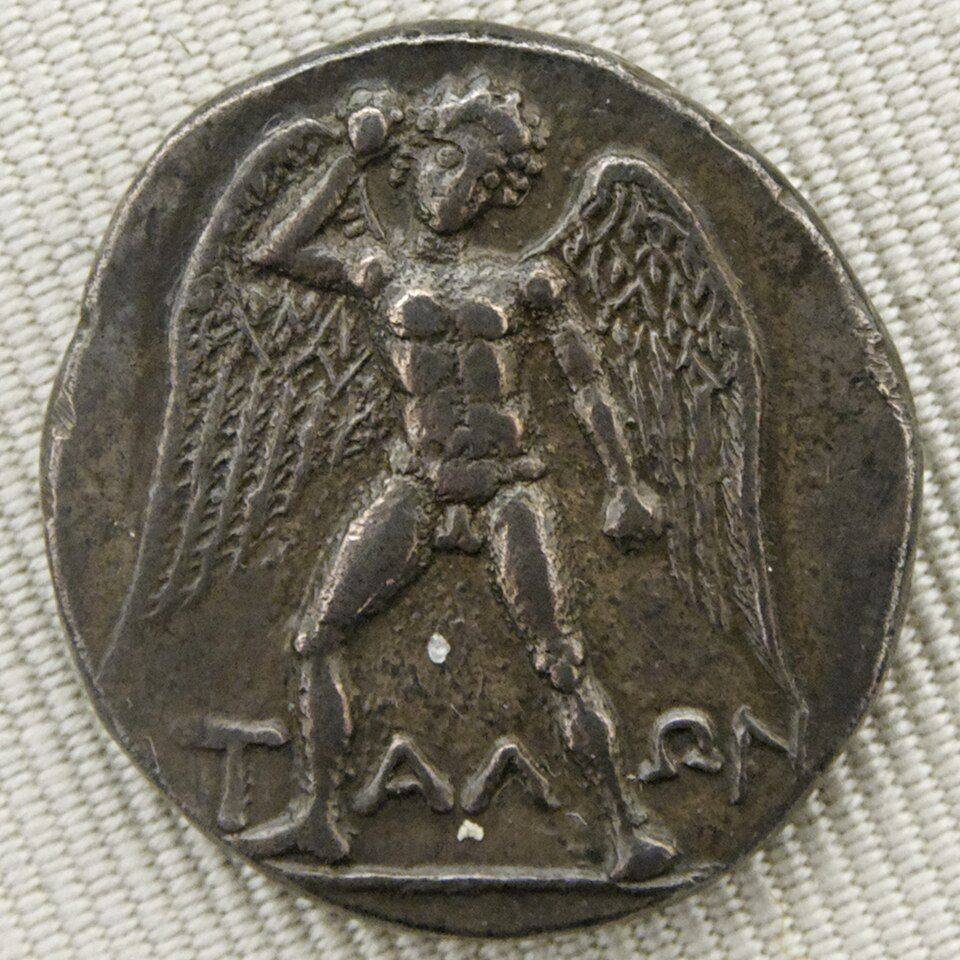 BeingTalosMyth or legendA giant of bronze circled Crete three times a day hurling rocks at ships. His whole body was armored except one blood-red vein running neck to ankle, sealed by a single nail. Ancient tales say Medea brought him down. Was Talos a monster, or one of the first imagined robots? Historians disagree.
More from the library
Ancient text · Morris Jastrow and Albert Tobias ClayAn Old Babylonian Version of the Gilgamesh EpicA king who loses his friend and goes looking for a way not to die. These Old Babylonian tablets are among the earliest fragments of the Gilgamesh story, nearly 4,000 years old.Public domain copyAncient text · Gerald MasseyAncient Egypt: The Light of the World, Vol. I (1907)Gerald Massey, an English poet and writer on Egypt, traced the shared themes of later religions back to Egyptian myth. Read his comparisons in full and check them against the Egyptian texts in our Library.Public domain copyAncient text · Gerald MasseyAncient Egypt: The Light of the World, Vol. II (1907)The second volume of Gerald Massey's 1907 work, where he sets Horus beside the Jesus of the Gospels point by point: the twelve, Anup the baptizer, the walk on the water. Read his comparisons in full and check them against the Egyptian texts in our Library.Public domain copyAncient text · Isaac Preston CoryAncient Fragments of the Phoenician, Chaldaean, Egyptian, Tyrian, Carthaginian, Indian, Persian, and Other WritersScraps of lost ancient histories, saved only because later writers quoted them. This collection includes Berossus on Babylon and Manetho on Egypt, in 1832 English.Public domain copyAncient text · Alexander Roberts, James Donaldson, Marcus Dods and othersAnte-Nicene Fathers, Vol. I (1885)The earliest Christian writings after the New Testament, in English. Justin Martyr, writing in the 2nd century, defends the faith to the Roman emperor and argues with a Jewish teacher, Trypho.Public domain copyAncient text · Peter Holmes, S. Thelwall and othersAnte-Nicene Fathers, Vol. III: Tertullian (1885)Tertullian of Carthage, the first great Christian writer in Latin, defends his faith around AD 200 and attacks the rival cults of his day, including the soldiers of Mithras.Public domain copyAncient text · Benjamin JowettCritiasThe only ancient account of Atlantis, and it breaks off mid-sentence. Plato gives the island's rings of water, its temples and its fall, then simply stops. Read what he wrote and judge for yourself.Public domain copyAncient text · W. M. Flinders PetrieEgyptian Tales, Translated from the Papyri: First Series, IVth to XIIth DynastyShort stories written down on papyrus more than 3,000 years ago, including the one about a sailor shipwrecked on an island ruled by a giant talking serpent. Petrie collected translations of the best.Public domain copyAncient text · W. M. Flinders PetrieEgyptian Tales, Translated from the Papyri: Second Series, XVIIIth to XIXth DynastyEgyptian stories from the New Kingdom, among them the tale of a prince doomed to die by a crocodile, a snake or a dog. Retold in plain English by Petrie.Public domain copyAncient text · William WhistonJosephus: Antiquities of the Jews, Whiston, 1737The first-century Jewish historian retells Genesis for Roman readers, including his own account of the sons of God and the giants they fathered. The whole Antiquities, in William Whiston's classic English translation.Public domain copyAncient text · F. C. ConybearePhilostratus: Life of Apollonius of Tyana, Conybeare, 1912A wandering sage of the first century who, according to his biographer, vanished from a Roman trial, visited holy men in India and was said to see things from far away. Here is the full English text, the way his admirers told it.Public domain copyAncient text · Bernadotte PerrinPlutarch's Lives (Loeb Classical Library, 11 volumes in one)Plutarch pairs a Greek and a Roman life, from Theseus and Romulus to Alexander and Caesar. Famous people, often shown through small odd stories. This is the full eleven-volume Loeb set.Public domain copyAncient text · Isis and Osiris: William BaxterPlutarch's Morals, Vol. IV (includes 'Of Isis and Osiris')This volume holds Plutarch's essay on Isis and Osiris, the best Greek account of the Egyptian myth of a murdered god, scattered across the land and put back together by his wife.Public domain copyAncient text · R. C. SeatonThe ArgonauticaJason and the Argonauts sail for the Golden Fleece, with a bronze giant guarding Crete and a princess who knows magic. The Greek poem behind the myth, translated into English.Public domain copyAncient text · R. H. CharlesThe Book of Enoch (1 Enoch), R. H. Charles, 1917The lost book that tells the long version of the Watchers story: two hundred angels who came down, taught forbidden skills, and fathered giants. Complete in English, from the translator the rest of the site relies on.Public domain copyAncient text · R. H. CharlesThe Book of Jubilees, R. H. Charles, 1902A retelling of Genesis in which an angel dictates history to Moses and everything runs on a calendar. It explains why the Watchers first came as teachers. Complete, in Charles's 1902 translation.Public domain copyAncient text · Sir E. A. Wallis BudgeThe Book of the DeadAn introduction to the Egyptian spells meant to carry the dead through the underworld, with extracts translated. Budge explains the weighing of the heart and the forty-two judges.Public domain copyAncient text · E. A. Wallis BudgeThe Book of the Dead: Facsimiles of the Papyri of Hunefer, Anhai, Kerasher and Netchemet (1899)Plates of four painted funeral papyri, the scribe Hunefer's among them, with Budge's transcripts and translations. It includes the opening of the mouth chapter and hymns to Ra and Osiris.Public domain copyAncient text · E. A. Wallis BudgeThe Book of the Dead: The Chapters of Coming Forth by Day, Vol. 2 (translation, vocabulary, etc.)The spells Egyptians wrote on papyrus and tucked in tombs, translated in full. Its own name means the chapters of coming forth by day. Budge's old wording is dated but complete.Public domain copyAncient text · Benjamin JowettThe Dialogues of Plato, Vol. I (Jowett, 1892)Nine of Plato's conversations, from the early questions about courage and friendship to the Symposium's speeches on love. This is the first of five volumes of Jowett's English text.Public domain copyAncient text · Benjamin JowettThe Dialogues of Plato, Vol. II (Jowett, 1892)Socrates on trial, in prison and at his death, told in the Apology, Crito and Phaedo. Also here are the Meno and the Gorgias, plus several shorter dialogues in the appendices.Public domain copyAncient text · Benjamin JowettThe Dialogues of Plato, Vol. III (Jowett, 1892)The Republic, then the Timaeus and Critias, which are the only places Plato describes Atlantis. Jowett's long introductions to each come with the text.Public domain copyAncient text · Benjamin JowettThe Dialogues of Plato, Vol. IV (Jowett, 1892)Plato's late and most difficult conversations, on what can be known and what exists. It holds the Parmenides, Theaetetus, Sophist, Statesman and Philebus.Public domain copyAncient text · Benjamin JowettThe Dialogues of Plato, Vol. V (Jowett, 1892)The Laws, Plato's last and longest work, about how a city should be run. The volume ends with Jowett's index of subjects and names.Public domain copyAncient text · Samuel BealThe Fo-Sho-Hing-Tsan-King: A Life of Buddha (1883)The Buddha's life as his followers told it, from Queen Maya's dream and his birth to his last teaching. This is Asvaghosha's poem in its Chinese version, in Samuel Beal's 1883 English.Public domain copyAncient text · James George FrazerThe Golden Bough (abridged, 1922)Why did a priest at Nemi have to kill the one before him? James Frazer's famous answer takes in magic, sacred kings and gods who die and come back, such as Adonis, Attis and Osiris.Public domain copyAncient text · G. C. MacaulayThe History of Herodotus, Volume 1Called the Father of History, and also the Father of Lies by critics. Herodotus asked Egyptian priests, Persian nobles and Scythian traders what they remembered, and wrote it all down. Books I to V.Public domain copyAncient text · G. C. MacaulayThe History of Herodotus, Volume 2The second half of the oldest big history we have, taking in the Persian invasion of Greece and the battle of Marathon. Herodotus quotes his sources, and he says when he doubts them.Public domain copyAncient text · Ralph T. H. GriffithThe Hymns of the Rigveda, Vol. IThe oldest hymns of India, sung to gods of fire, storm and dawn long before anyone wrote them down. Griffith's 1889 verse translation, volume 1, with his notes.Public domain copyAncient text · Ralph T. H. GriffithThe Hymns of the Rigveda, Vol. IIBooks 3 to 6 of the oldest Sanskrit hymns, in Griffith's 1890 verse translation with his commentary. The famous Gayatri verse is in Book 3, hymn 62.Public domain copyAncient textThe King James Apocrypha (1611)The books that sat between the Old and New Testaments in the 1611 Bible, then were quietly dropped from most printings. Here they are in the same English, with their own stories of angels, demons and sky armies.Public domain copyAncient textThe King James Bible (1611)The English Bible that gave the world the line about giants in the earth, in the words most of this site quotes. Read Genesis 6 and Numbers 13 for yourself, then follow the strange story of who the Nephilim were.Public domain copyAncient text · Kisari Mohan GanguliThe Mahabharata of Krishna-Dwaipayana Vyasa Translated into English Prose: Vana Parva, Part 2The forest book of the Mahabharata. The exiled heroes travel to holy places and hear tales from sages, including a story of a flood and a fish. This is the second part of it.Public domain copyAncient text · Kisari Mohan GanguliThe Mahabharata of Krishna-Dwaipayana Vyasa, Volume 1 (Books 1, 2 and 3)The longest poem in the world, about a war between cousins. This volume covers the first books, where gods, sages and warriors are all introduced. Ganguli's prose translation is the classic English one.Public domain copyAncient text · Kisari Mohan GanguliThe Mahabharata of Krishna-Dwaipayana Vyasa, Volume 2 (Books 4 to 7)The Pandavas hide for a year in disguise, the two sides gather armies, and the great war begins on the plain of Kurukshetra. These four books run from the hiding to the death of Drona.Public domain copyAncient text · Kisari Mohan GanguliThe Mahabharata of Krishna-Dwaipayana Vyasa, Volume 3 (Books 8 to 12)The last days of the war, a night raid on the sleeping camp, and the long grief that follows. Book 12 then turns to a dying elder's teaching on kingship and duty.Public domain copyAncient text · Kisari Mohan GanguliThe Mahabharata of Krishna-Dwaipayana Vyasa, Volume 4 (Books 13 to 18)The closing six books, from more teaching on duty to the destruction of Krishna's people and the heroes' last walk. With this volume the whole Ganguli translation is on the site.Public domain copyAncient text · Marmaduke PickthallThe Meaning of the Glorious Koran, Pickthall, 1930A complete English Quran by Marmaduke Pickthall, an English convert to Islam. It includes the passages about the jinn, Gog and Magog, and the youths who slept in the cave, all in a single, readable translation.Public domain copyAncient text · Thomas J. McCormackThe Mysteries of Mithra (Cumont, 1903)The Persian god Mithra became the centre of a secret Roman cult, worshipped by soldiers in cave-like temples. Franz Cumont's study gathers the monuments and the ancient writers who mention it.Public domain copyAncient text · John Bostock and Henry T. RileyThe Natural History of Pliny, Volume 1 (of 6)Pliny the Elder's encyclopedia of everything the Romans knew, or thought they knew, about the world. Volume 1 of 6, in a full English translation. Pliny died in 79 AD watching Vesuvius erupt, so this is the last book he finished.Public domain copyAncient