Credible Theories Sign in
Greece and Rome · Strabo, Geography 2.4.1, reporting Polybius on Pytheas

Neither land nor sea nor air, Strabo, Geography 2.4.1, reporting Polybius on Pytheas

Share

In plain words

Pytheas said Britain's coastline ran more than forty thousand stadia. Beyond it lay Thule, and past that a region with no true land, sea or air, only a thick mixture of all three, like a sea-lung, a kind of jellyfish.

ReferenceStrabo, Geography 2.4.1, reporting Polybius on Pytheas
WrittenWritten by Strabo, a Greek geographer, retelling Polybius's criticism of Pytheas
SetThe far north beyond Britain, around the island of Thule
Pytheas reported that the coast-line of the island was more than forty thousand stadia, and added his story about Thule and about those regions in which there was no longer either land properly so‑called, or sea, or air, but a kind of substance concreted from all these elements, resembling a sea-lungs

Documented · Modern book, Written by Strabo, a Greek geo Translation: H. L. Jones, 1917

Read it literally

An explorer claims that beyond the farthest island the world itself thickens into something like a jellyfish, which he says he saw with his own eyes. The Thule file sets it beside Strabo's scorn and the Roman fleet that later saw Thule from afar.

What scholars say

Pytheas's own book is lost; this is his report as retold by two writers who doubted him.

Themes From the sky
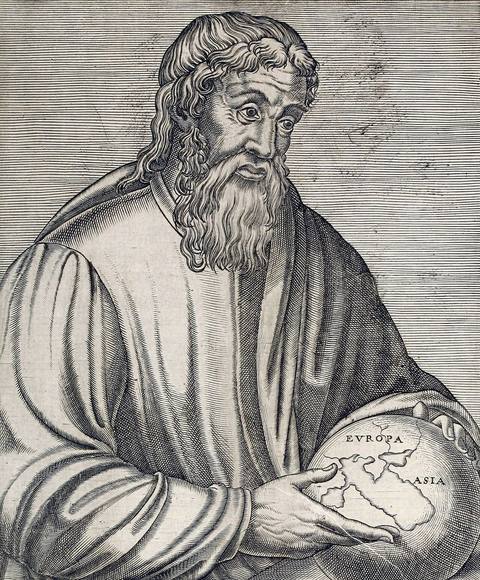
People and places herePytheasStrabo

Questions people ask about Strabo, Geography 2.4.1, reporting Polybius on Pytheas

Did Pytheas claim to have seen it himself?

Yes. He said he saw the thing that resembles a sea-lung with his own eyes, and told the rest from hearsay.

Where did Pytheas say he went next?

On his way back, he said, he visited the whole coastline of Europe from Gades to the Tanais.

Used on these files

  • Thule, the farthest island Almost credibleAn island six days' sail north of Britain, near a sea where land, water and air turned into one thick substance.

Where this comes from

EvidenceDocumented

Comes from Geography, by Strabo, Strabo, Geography 2.4.1, reporting Polybius on Pytheas, read here in the H. L. Jones. A 17-book description of the lands and peoples of the known world by Strabo, a Greek geographer, finished around AD 20 to 25. It includes an account of the city of Helike sinking in 373 BC.

What this means

The text exists and is quoted from a published translation. What it describes is a separate question.

Primary records exist: an original document, a published text, an official file or a dated report. We link to them. This level says the record exists and what it says, not that every claim in it is true.

See all five labels

Sources

  1. LacusCurtiusLacusCurtius, a website of Greek and Roman texts and translations, many from the Loeb Classical Library, put online and carefully proofread by Bill Thayer and hosted on a University of Chicago server.H. L. Jones, The Geography of Strabo, vol. 1 (Loeb Classical Library, 1917)Primary text
  2. Geography, by StraboA 17-book description of the lands and peoples of the known world by Strabo, a Greek geographer, finished around AD 20 to 25. It includes an account of the city of Helike sinking in 373 BC.Strabo, Geography 1.4.2-3, trans. H. L. Jones (Loeb Classical Library, 1917), LacusCurtiusPrimary text

Scholarly dates are rounded. The wording follows the named public-domain translation.

More from Greece and Rome

Two more stories, and what each shares with Neither land nor sea nor air.

Photo credits
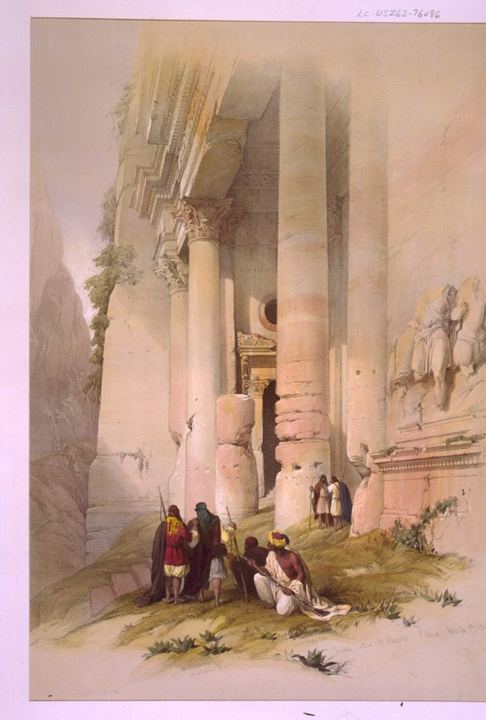
RelatedA tomb front at the end of the gorgeJohn Lewis Burckhardt, Travels in Syria and the Holy Land, Wady Mousa (1812)

Burckhardt walked for about twenty-five minutes through a narrow gorge until it opened out.

Also about Strabo
Photo credits
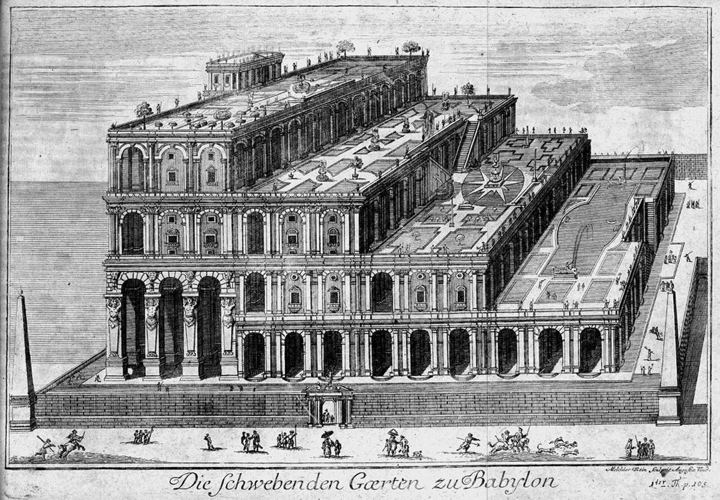
RelatedA garden built to look like mountainsBerossus, Chaldean History, book 3, quoted by Josephus, Against Apion 1.19

Berossus says King Nebuchadnezzar built raised walks on stone pillars in his new palace and planted them with every kind of tree.

Also about Strabo

Updated

Discussion