How the rabbit hole works. Start with anything that grabs you, say UFOs. Every person, place and document a page mentions links to its own page, so a UFO file leads to a witness, the witness leads to the people who investigated the case, and it keeps going.
The path you take shows in the bar under the top menu on every page, so you can step back any time or climb out and start again.
This is a short passage from the Histories by Herodotus, a Greek history written around 430 BCE. Egyptian priests told him that, over the long past they recorded, the sun had moved from its usual place of rising four times. Twice it rose where it now sets, and twice it set where it now rises. Herodotus does not claim to believe all of it.
ReferenceHerodotus, Histories 2.142
Writtenc. 430 BCE
SetEgyptian priests' records
In this time they said that the sun had moved four times from his accustomed place of rising, and where he now sets he had thence twice had his rising, and in the place from whence he now rises he had twice had his setting.
A general shouts at the sun to stop, and it stops. A goddess holds back the dawn, a hero lassoes the sun, and a wife's curse keeps it from rising at all.
Herodotus, Histories 2 (what the priests of Egypt said) is one telling. The same story is told 8 more times, in 7 parts of the world. Follow it:
The open question: When ancient writers say the sun stood still, are they remembering something people really saw in the sky, or using the boldest picture they could find for a god's power over time? Join the debate
Questions people ask about Herodotus, Histories 2.142
Who was Herodotus?
Herodotus was a Greek writer born around 484 BCE in Halicarnassus, now Bodrum in Turkey. The Roman orator Cicero called him 'the father of history'. His Histories explain the wars between the Greeks and Persia, and the whole of Book 2 is about Egypt, which he visited and described from what he saw and was told.
How did the priests reach their huge number of years?
They told Herodotus there had been 341 generations of kings and high priests from the first king down to Sethos. Herodotus counted three generations to a hundred years, which gave him 11,340 years. He adds that in all that time, the priests said, no god had appeared in human form.
What did the priests tell Hecataeus?
In the next chapter, Herodotus says the earlier Greek writer Hecataeus once boasted to the priests at Thebes that his family went back sixteen generations to a god. The priests led him past 345 wooden statues of high priests, each the son of the one before, to show that no god was among their ancestors.
Where this comes from
EvidenceDocumented
Comes fromThe Histories, by Herodotus, Herodotus, Histories 2.142, read here in the G. C. Macaulay. A history of the wars between Greece and Persia by Herodotus, often called the father of history, written around 430 BC. It also records what he heard on his travels, such as Egyptian priests' claims about the age of their kingdom. He sometimes passes on stories he did not believe himself.
What this means
The text exists and is quoted from a published translation. What it describes is a separate question.
Primary records exist: an original document, a published text, an official file or a dated report. We link to them. This level says the record exists and what it says, not that every claim in it is true.
The Histories, by HerodotusA history of the wars between Greece and Persia by Herodotus, often called the father of history, written around 430 BC. It also records what he heard on his travels, such as Egyptian priests' claims about the age of their kingdom. He sometimes passes on stories he did not believe himself.G. C. Macaulay, The History of Herodotus (1890)Primary textArchived copy, 2026-09-22
Scholarly dates are rounded. The wording follows the named public-domain translation.
More from Greece and Rome
The story before and after this one, and what each shares with The sun rose where it now sets.













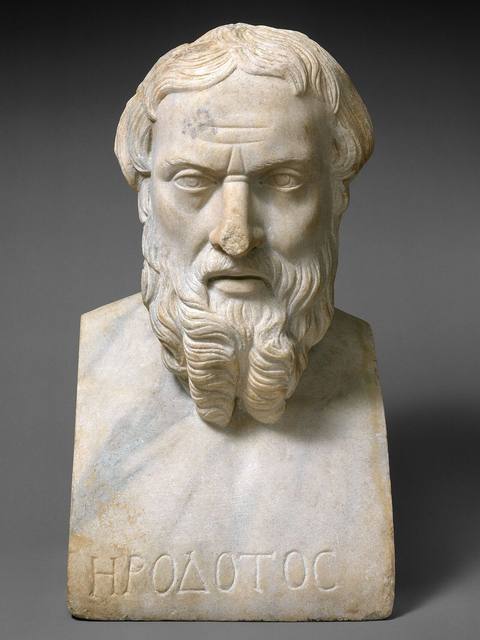 Herodotus