How the rabbit hole works. Start with anything that grabs you, say UFOs. Every person, place and document a page mentions links to its own page, so a UFO file leads to a witness, the witness leads to the people who investigated the case, and it keeps going.
The path you take shows in the bar under the top menu on every page, so you can step back any time or climb out and start again.
This is a short passage from 2 Kings, a book of the Bible with stories of the prophets Elijah and Elisha, written around 600 to 550 BCE. In the story, a chariot of fire and horses of fire appear and separate the two men. Then Elijah goes up into heaven in a whirlwind. Scholars read it as a legend about a prophet.
Reference2 Kings 2:11
Writtenc. 600–550 BCE
Setc. 850 BCE
There appeared a chariot of fire, and horses of fire, and parted them both asunder; and Elijah went up by a whirlwind into heaven.
Documented · Ancient text, c. 600–550 BCE Translation: KJV
AdvertisementAd space
Read it literally
A pickup. Fifty men searched for three days and never found a body (2:17). Malachi 4:5 says Elijah will come back.
What scholars say
Read as a prophetic legend.
Themes Taken up alive From the sky Looks like technology
Enoch, Elijah, Romulus, Heracles, Krishna and Jesus all leave the earth by going up: in a whirlwind, a cloud, a storm or a blaze of light. The stories quoted side by side.
2 Kings 2:11 (Elijah) is one telling. The same story is told 6 more times, in 3 parts of the world. Follow it:
He did not die. He sleeps inside a mountain, under a castle or on a far island, and when his people need him most he will wake. Britain, Germany, Denmark, Persia, India, Israel and Mexico all tell of a hero who is only waiting.
2 Kings 2 and Malachi 4 (Elijah taken up, and promised again) is one telling. The same story is told 7 more times, in 4 parts of the world. Follow it:
The open question: Is the sleeping king a hope people invent whenever they lose a leader they loved, or one very old idea that has travelled from land to land? Join the debate
Questions people ask about 2 Kings 2:11
What happens right after Elijah is taken up?
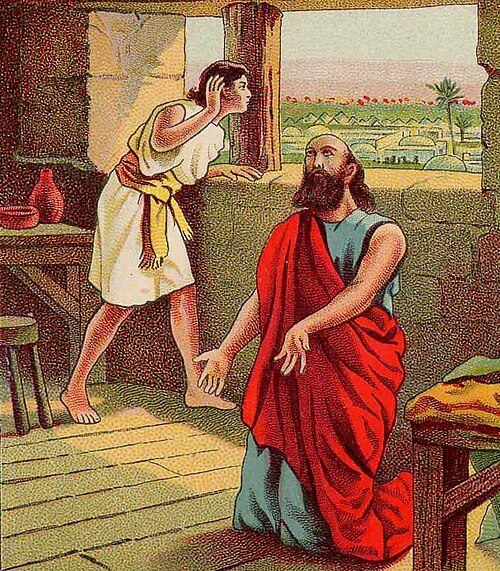
Elisha, who had asked for a double share of his teacher's spirit, picks up Elijah's fallen cloak. He strikes the Jordan River with it, and the water parts so he can cross. The group of prophets watching from Jericho declares that Elijah's spirit now rests on Elisha, who goes on to become the leading prophet of Israel.
Who wrote the Books of Kings?
The books do not name an author. The Talmud credits the prophet Jeremiah. Most modern scholars see Kings as part of a longer history running from Deuteronomy through Kings, with a first edition possibly made under King Josiah and a final edition during the exile in Babylon. The last event it records is King Jehoiachin's release from prison around 561 BCE.
Why is there a cup for Elijah at Passover?
At the Passover seder, many Jewish families pour a special cup of wine for Elijah and open the door for him, expressing hope that he will come to announce the age of the Messiah. In the New Testament, Jesus links Elijah's return with John the Baptist, and Elijah appears beside Moses at the Transfiguration.
Where this comes from
EvidenceDocumented
Comes fromThe Books of Kings (1 and 2 Kings), 2 Kings 2:11, read here in the King James Version. Two books of the Bible running from King Solomon to the fall of Jerusalem to Babylon in the 580s BC, with stories of the prophets Elijah and Elisha. Scholars think they were finished around the 500s BC, using older royal records.
What this means
The text exists and is quoted from a published translation. What it describes is a separate question.
Primary records exist: an original document, a published text, an official file or a dated report. We link to them. This level says the record exists and what it says, not that every claim in it is true.
The King James BibleThe English Bible made for King James I and first printed in 1611; the wording most people know comes from a 1769 update. It is out of copyright, which is why we quote it. The 1611 printing also had the Apocrypha, extra books kept in Catholic and Orthodox Bibles.King James Version (1611; standard 1769 text), with ApocryphaPrimary textArchived copy, 2026-10-03
Scholarly dates are rounded. The wording follows the named public-domain translation.
More from Hebrew Bible
Two more stories, and what each shares with Elijah's chariot of fire.